
North Carolina Public Records Act and Union County
North Carolina has one of the broader open-records laws in the country. The North Carolina Public Records Act, found in Chapter 132 of the General Statutes, sets the baseline for what the public may see. G.S. 132-1 defines a public record as documentary material made or received by a government agency while doing public business. That covers papers, letters, maps, photographs, sound recordings, and electronic data. The law starts from the idea that these records belong to the people, not the agency that holds them.
Any person may ask to inspect or copy a public record. You do not have to be a Union County resident. You do not have to give a reason. G.S. 132-6 requires custodians to allow inspection and provide copies at reasonable times. The catch is that an agency does not have to create a record that does not already exist. It only has to give you what it already keeps.
Court records work a little differently. They follow Chapter 132 and a court-specific set of rules on top of it. G.S. 7A-109 says the Clerk of Superior Court keeps court files, dockets, and indexes, and that those records stay open during regular office hours unless the law blocks them. So a Union County court file is public by default, but juvenile, sealed, and expunged matters are not.
Court Records vs Administrative Records in Union County
This is the split that trips up most people. North Carolina has two different kinds of "public records" when it comes to the courts. There are county case files, and there are state administrative records. They are held by different bodies, and you ask for them in different ways.
County case files are the actual court records for Union County. Think criminal cases, civil suits, divorces, estates, and judgments. The local custodian for those files is the Union County Clerk of Superior Court. The North Carolina Administrative Office of the Courts, called NCAOC, is not the keeper of these files. Its own public record request page says plainly that NCAOC is not the custodian of court documents, case information, or birth and marriage certificates, and that it does not run civil or criminal background searches.
Administrative records are the Judicial Branch's own internal business documents, like policies, budgets, or contracts. Those go through the NCAOC online request form. So if you want a case file, you go to the county clerk. If you want a statewide administrative document, you use the NCAOC form. The North Carolina public records law FAQ walks through the difference in plain language.
Note: A Union County case file request must go to the county Clerk of Superior Court, not to the state office, which does not hold local court documents.
What Records Each Union County Office Holds
No single Union County office holds every public record. Court files, land records, vital records, and law enforcement data each sit in a separate place. Match the record to the office before you ask, and you skip a lot of back and forth. The list below sorts the common public records people look for and names the office that keeps each one.
- Court case files - criminal, civil, family, traffic, estate, and judgment records held by the Clerk of Superior Court.
- Land records - deeds, deeds of trust, plats, and powers of attorney filed with the Register of Deeds.
- Vital records - birth, death, and marriage certificates issued by the Register of Deeds.
- Arrest and jail data - the roster, daily bulletin, and recent arrests posted by the Sheriff's Office.
- Criminal background checks - certified single-county searches done by the Clerk of Superior Court.
For court files, the official search tool is the North Carolina eCourts Portal. You can read more about it on the Union County court records page. The Register of Deeds is a county office, not a court office, and it handles deeds, plats, assumed names, military discharges, notary commissions, and passport acceptance along with the vital records noted above.
Vital Records Through the Register of Deeds
Birth, death, and marriage certificates are public records, but the certified copies are restricted by who may receive them. In Union County these come from the Register of Deeds at 500 North Main Street, not the court clerk. Certified copies cost $10 each. Uncertified copies cost $1 each. The office takes money orders, cash, and credit card.
Not everyone can get a certified copy. G.S. 130A-93 limits certified vital records to the person named, a spouse, a sibling, a child or stepchild, a parent or stepparent, a grandparent or grandchild, or an authorized agent or attorney with proof. Anyone may request an uncertified copy, since those count as public record. Marriage records overlap with court records when a divorce is involved, so see the marriage and divorce records page for that path.
How to File a Public Records Request in Union County
Filing a request is not hard once you know which office holds the record. There is no special form required for most public records under Chapter 132, though some offices offer one. A clear, written request that names the records and a date range gets the best result. The steps below cover a general public records request.
- Pick the right office. Court files go to the Clerk of Superior Court. Land and vital records go to the Register of Deeds. Arrest data comes from the Sheriff's Office.
- Describe the records as exactly as you can. Names, case numbers, dates, and document types all help the office find what you want.
- Submit the request. You can ask in person, by mail, or through an office's online channel where one exists. The NCAOC online form handles only state administrative records.
- Wait for the response. The office reviews the request, pulls the records, and removes anything the law keeps confidential.
- Pay any copy or service fee and receive the records. Certified copies cost more than plain copies and may need a separate request.
If a request is for a certified criminal background check, that is a separate process. It uses Form AOC-CR-314 and a $25 fee paid to the Clerk of Superior Court. The Clerk of Superior Court page lays out that process step by step.
NCAOC Public Records Request Form Fields
The state offers an online public record request form for Judicial Branch administrative records. It is short, with two main sections, and it ends with a clear notice about what NCAOC does not hold. The table below lists the fields you fill in on the NCAOC form.
| Field | Required | Notes |
|---|---|---|
| Section A - Requesting Individual | Yes | Your identity and contact information. |
| Section B - Records Requested | Yes | Describe the existing Judicial Branch administrative record you want. |
| Complete / Submit | Yes | Confirms and sends the request. |
| Notice | n/a | States NCAOC is not custodian of court documents, case data, or birth and marriage certificates. |
For a certified single-county criminal record search, the Clerk uses Form AOC-CR-314 instead. That form asks for the county, the name searched, requester information, a clerk certification section, and the $25 payment. You can find both forms through the statewide judicial forms search.
Public Records Fees in Union County
Fees depend on what you ask for and who holds it. North Carolina lets agencies charge the actual cost of copies. G.S. 132-6.2 allows copy charges and a special service charge when a request takes a lot of staff time. Certified copies cost more than plain ones because a clerk signs and seals them. The table pulls the figures confirmed by official Union County and Judicial Branch pages.
| Item | Amount |
|---|---|
| Certified single-county criminal record search (AOC-CR-314) | $25 |
| Certified birth, death, or marriage copy (Register of Deeds) | $10 each |
| Uncertified birth, death, or marriage copy | $1 each |
| General expunction filing fee | $175 (many dismissed or juvenile types are free) |
The Register of Deeds notes that an extra fee applies for a birth certificate when the birth happened outside Union County, though the exact amount was not posted in the page text. Court copy fees follow the statewide cost schedule, so confirm the current rate with the Clerk of Superior Court before you send payment.
Response Timelines
North Carolina does not set a hard, fixed deadline in days for every request. The law says custodians must provide access as promptly as possible. A simple request for a single file moves fast. A broad request that spans years of records takes longer and may draw a special service charge under G.S. 132-6.2.
To speed things up, keep the request narrow and clear. Give the office a name, a date range, and a record type. If you only need to look, ask to inspect rather than copy, since inspection is generally free.
Records That Are Restricted or Confidential
Open is the rule, but several record types are closed by statute. These are not denied out of habit. The law itself keeps them confidential to protect children, victims, and people whose cases ended in their favor. Knowing the restricted list saves you from asking for something no office can release.
- Juvenile delinquency records, withheld under G.S. 7B-3000.
- Expunged records, sealed or destroyed under the G.S. 15A-145 series and held confidential under G.S. 15A-151.
- Adoption files and involuntary mental health commitment records.
- Abuse, neglect, and Department of Social Services files.
- Personal identifiers like Social Security numbers, bank account numbers, and minors' data, which are redacted even on open files.
Expunction itself runs through the court. The petition is filed with the Clerk of Superior Court in the county where the person was charged or convicted, so Union County cases go to the Union County clerk. For dismissed charges and not-guilty findings, G.S. 15A-146 often allows expunction with no fee.
Union County Sheriff Records and Other Sources
The Union County Sheriff's Office posts a fair amount of public data online through its P2C system. You can search the current jail roster, read the daily bulletin of arrests and citations, and view recent arrests. Those tools are free and need no formal request. They are a good first stop for arrest and custody data before you file anything in writing.
For full arrest detail, see the Union County arrest records page, and for the live roster, see inmate records. Some legal help is also free. The screenshot below comes from Legal Aid of North Carolina, which helps eligible low-income residents with civil matters and some expunctions.
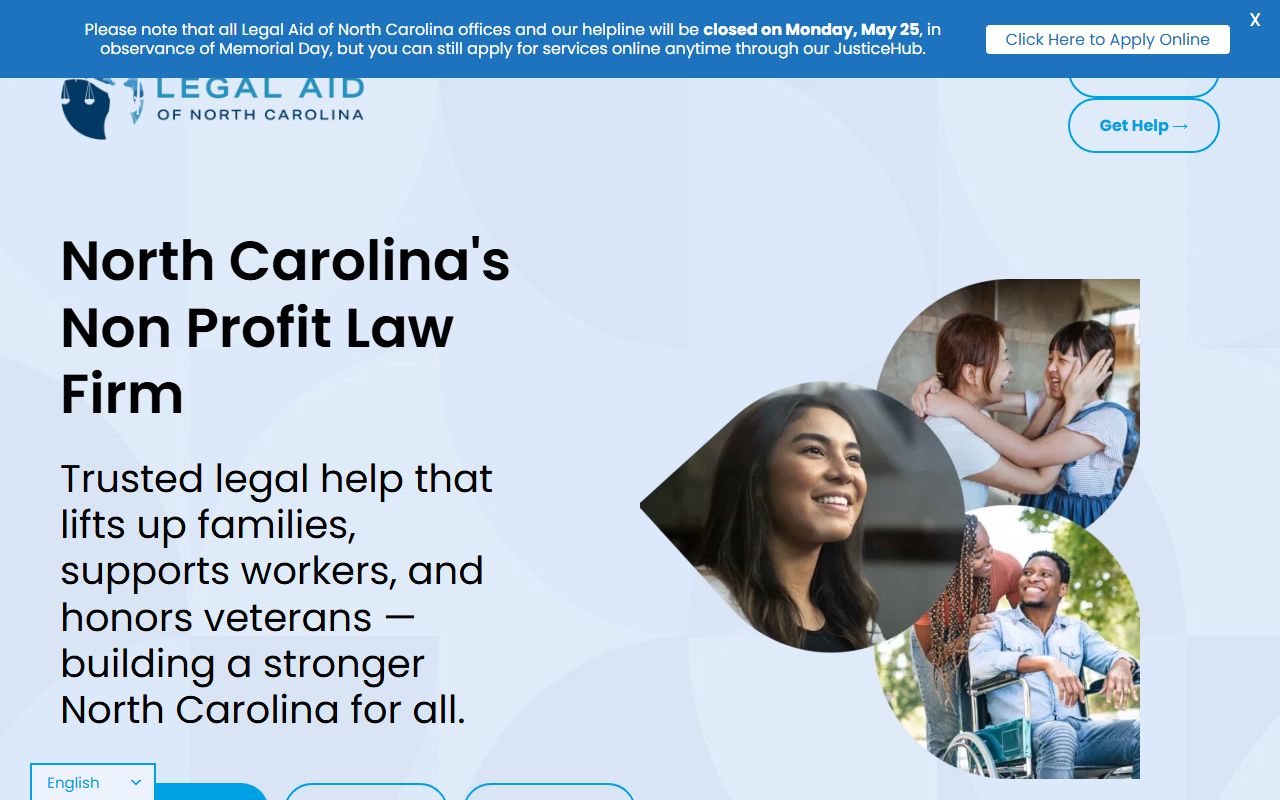
Legal Aid will not pull records for you, but it can explain your rights and help with filings tied to those records. For court-appointed counsel in criminal cases, the next resource handles that side.
The image below shows the North Carolina Office of Indigent Defense Services, which coordinates appointed counsel for people who cannot afford a lawyer.
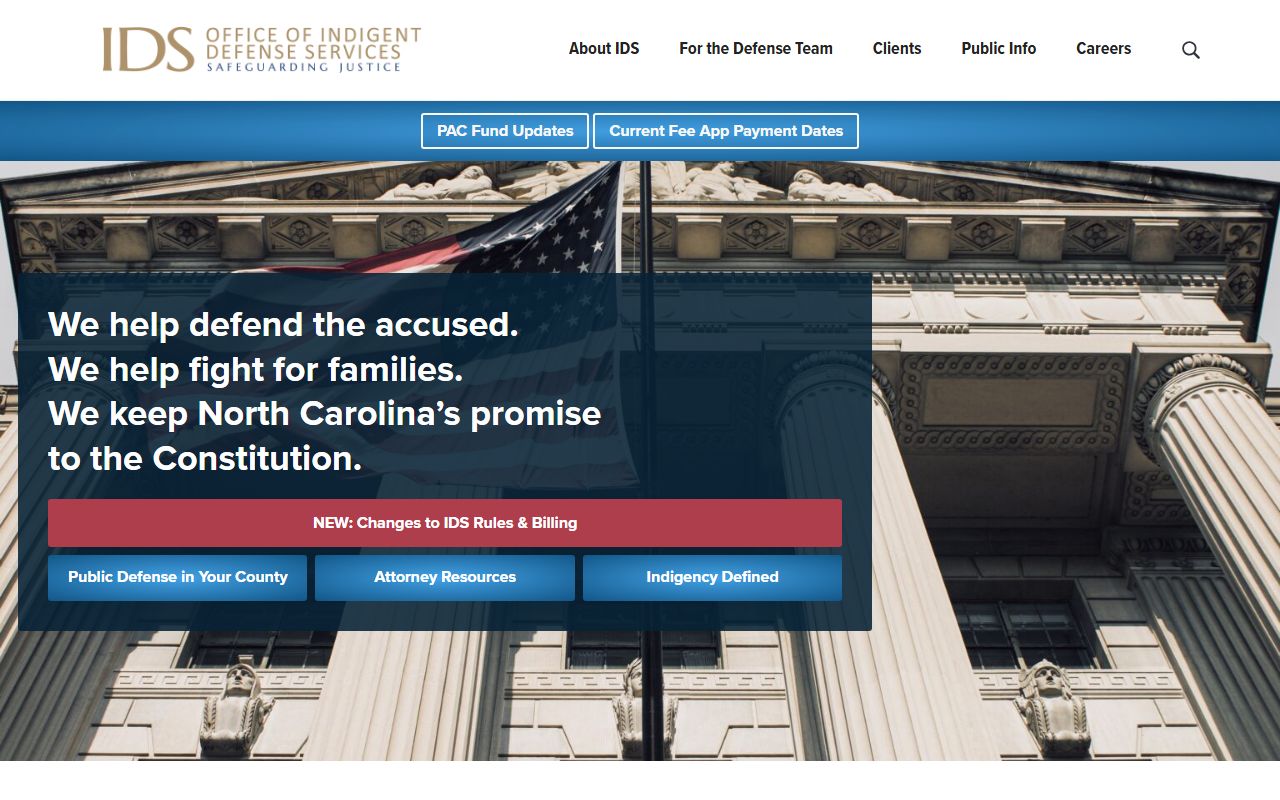
Indigent Defense Services does not provide help with expunction petitions, so a separate civil resource is needed for that. Court-appointed counsel covers criminal defense, not record requests.
If Your Request Is Denied
Denials happen, usually because a record is confidential by law. If you think a record should be open and an office still says no, you have options. Ask the office to point to the specific statute it relied on. A clear statutory cite tells you whether the denial is sound.
North Carolina's Public Records Act lets a requester who is wrongly denied access bring a civil action in court to compel release. That is a serious step, so weigh it against the value of the record. For records tied to a court case, an authorized party can also ask the Clerk or a judge about access to a sealed or restricted file.