
What Union County District Court Handles
District Court is the busier of the two trial courts by volume. In Union County it hears misdemeanors, infractions, and traffic matters. It also handles most family law, including divorce, custody, child support, and domestic violence protective orders. Juvenile matters and small claims appeals run through District Court too. The civil jurisdiction is capped by a statutory threshold, so smaller-dollar civil disputes land here.
Because District Court touches daily life so often, it produces a large share of the county's court records. A traffic ticket, a landlord-tenant case, a misdemeanor charge, a child custody fight, these are District Court matters. The court sits in the Union County Judicial Center in Monroe as part of District Court District 30.
The image below is the Judicial Branch District Court overview, which explains the court's statewide role.
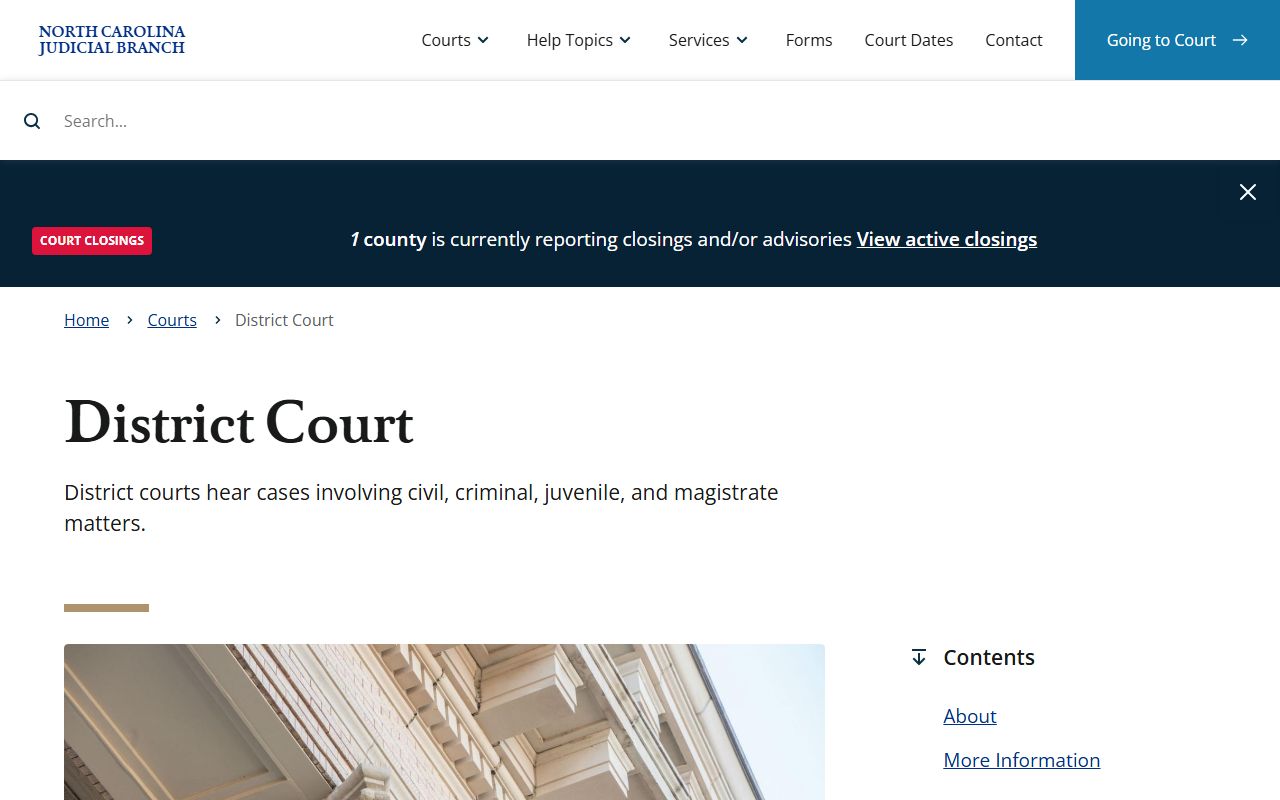
The same structure applies in Union County, where District 30 covers the county's District Court matters.
What Union County Superior Court Handles
Superior Court is the higher trial court. In Union County it hears felony criminal cases, civil cases above the District Court threshold, and certain appeals or trials de novo from District Court. Felonies that begin with an arrest and a District Court first appearance ultimately proceed in Superior Court if indicted or bound over. Major civil suits, large money claims, and complex disputes also belong here.
Superior Court and District Court are both state courts, not county departments, even though they share the courthouse. Union County is Superior Court District 30, the same district number used for District Court and for prosecution. The two trial courts use the same building, the same clerk, and the same eCourts records system, so a Union County case search reaches both.
The screenshot below shows the Judicial Branch Superior Court overview.
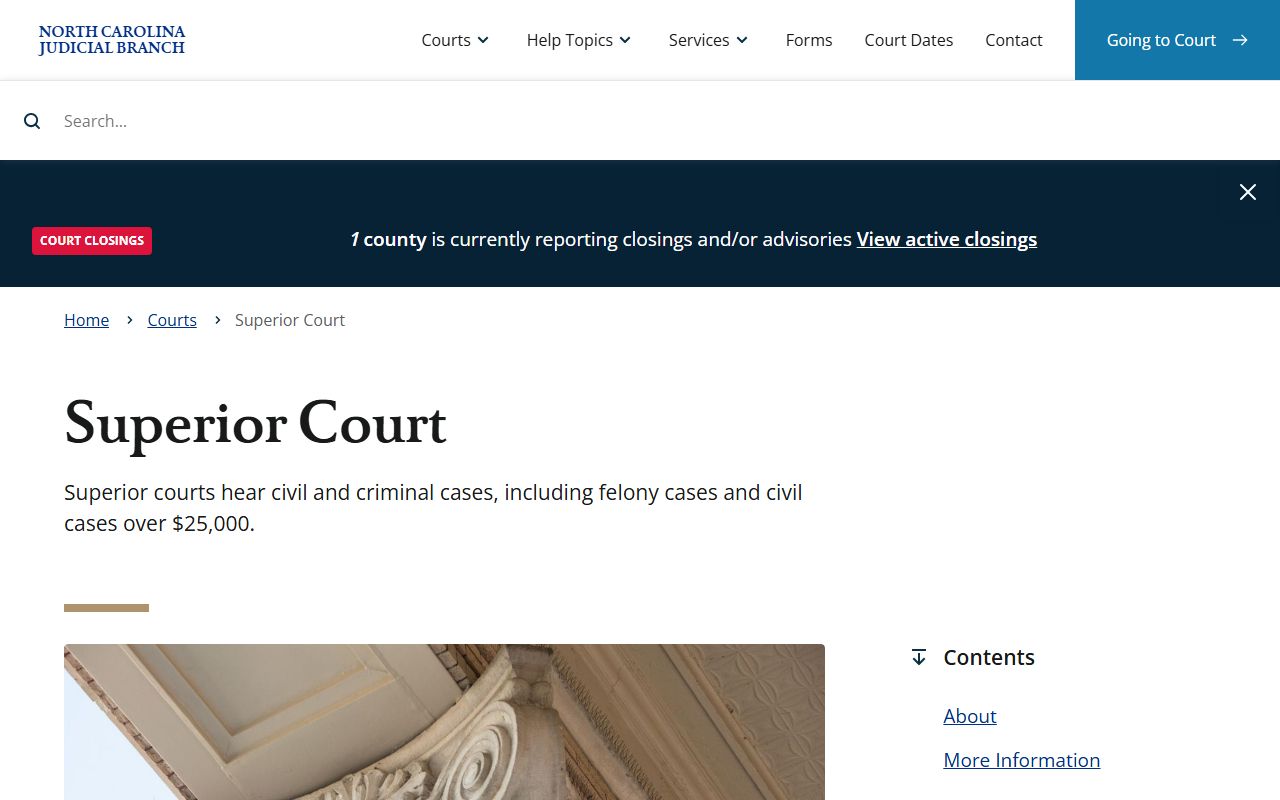
It frames how felony and larger civil matters move through the higher trial court that serves Union County.
Union County Courts and Offices
All of the county's trial-court business runs out of a small set of offices, most of them in the Judicial Center on North Main Street. The magistrates office sits apart, on Presson Road near the jail. The table below maps the main Union County courts and offices, their district, address, and phone where confirmed.
| Court / Office | District | Address | Phone |
|---|---|---|---|
| Union County Superior Court | Superior Court District 30 | 400 North Main Street, Monroe, NC 28112 | Use contact directory |
| Union County District Court | District Court District 30 | 400 North Main Street, Monroe, NC 28112 | Use contact directory |
| Clerk of Superior Court | County court clerk | 400 North Main Street, Monroe, NC 28112 | 704-698-3196 |
| District Attorney | Prosecutorial District 30 | Union County Judicial Center, Monroe | 704-698-3110 |
| Magistrates Office | District 30 magistrate functions | 3344 Presson Road, Monroe, NC 28112 | Use contact directory |
| Register of Deeds (not a court office) | County land and vital records | 500 North Main Street, Monroe, NC 28112 | 704-283-3843 |
Use the Union County contact directory as the live source for office-specific phone numbers, since the courthouse holds several offices under one roof. The Clerk of Superior Court keeps the files for both trial courts, as the Clerk of Superior Court page explains.
Magistrates in Union County
Magistrates are judicial officers, not judges, but they carry real authority. In Union County they handle initial appearances, set conditions of release, issue arrest warrants and other process, and hear small claims. They also perform civil marriages. The magistrates office is on Presson Road, not in the downtown Judicial Center.
Small claims is where most people meet a magistrate. The magistrate hears the case, enters judgment, and a losing party can appeal to District Court for a new hearing. Magistrate weddings are by appointment only, held Monday, Tuesday, Thursday, and Friday at set times at the magistrates office on Presson Road.
Note: A small claims judgment from a Union County magistrate can be appealed to District Court for a fresh hearing, called a trial de novo.
Superior Court vs District Court vs Magistrate
The three trial-level bodies in Union County do not overlap much. Each has its own lane. The comparison below sets them side by side so you can tell which one hears a given matter before you file or search.
| Point | Superior Court | District Court | Magistrate |
|---|---|---|---|
| Criminal | Felonies | Misdemeanors, infractions, traffic | Warrants, first appearances, release conditions |
| Civil | Larger and complex civil suits | Civil within statutory threshold, family law | Small claims within limits |
| Officer | Superior Court judge and jury | District Court judge, usually no jury | Magistrate, no jury |
| Appeal goes to | Court of Appeals | Superior Court in some matters, Court of Appeals in others | District Court for a new hearing |
All three feed the same record system, so a search on the eCourts Portal can surface matters from each. For the records themselves, see the Union County court records page, and for scheduled hearings, see court dockets.
How a Case Moves Through the System
A North Carolina case does not stay in one court forever. It can climb the ladder on appeal. The trial level is the start, and the two appellate courts sit above it. The flow is the same for Union County cases as for any other county.
Case flow: District Court › Superior Court › Court of Appeals › Supreme Court
- A case begins in District Court or Superior Court depending on the charge or claim. Felonies often start with a District Court first appearance, then move up.
- The trial court decides the matter. A party who loses may have a right to appeal or, in some District Court matters, a trial de novo in Superior Court.
- Most appeals from the trial courts go to the North Carolina Court of Appeals, the intermediate appellate court.
- The North Carolina Supreme Court takes certain appeals, some by right and some by discretion, as the state's highest court.
The screenshot below shows the North Carolina Court of Appeals page, the first stop above the trial courts.
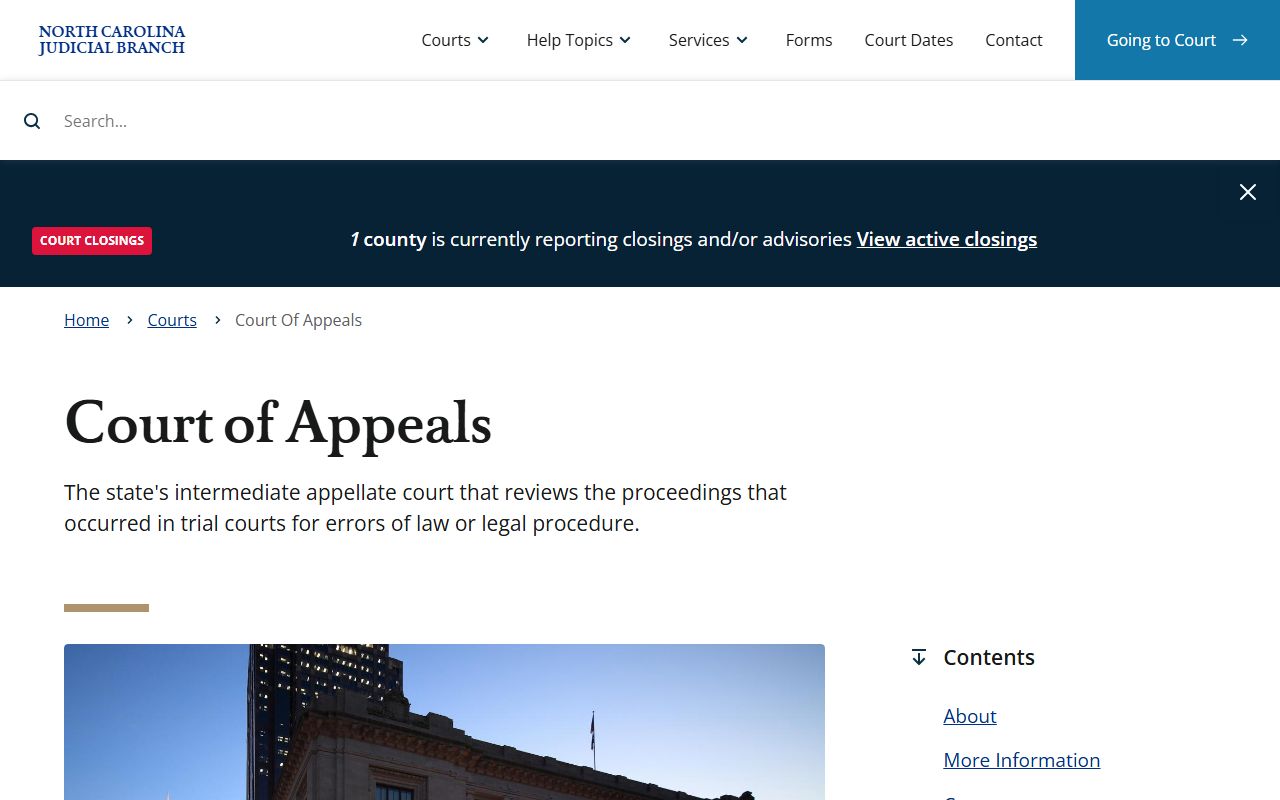
From there, the next image is the North Carolina Supreme Court page, the top of the state ladder.
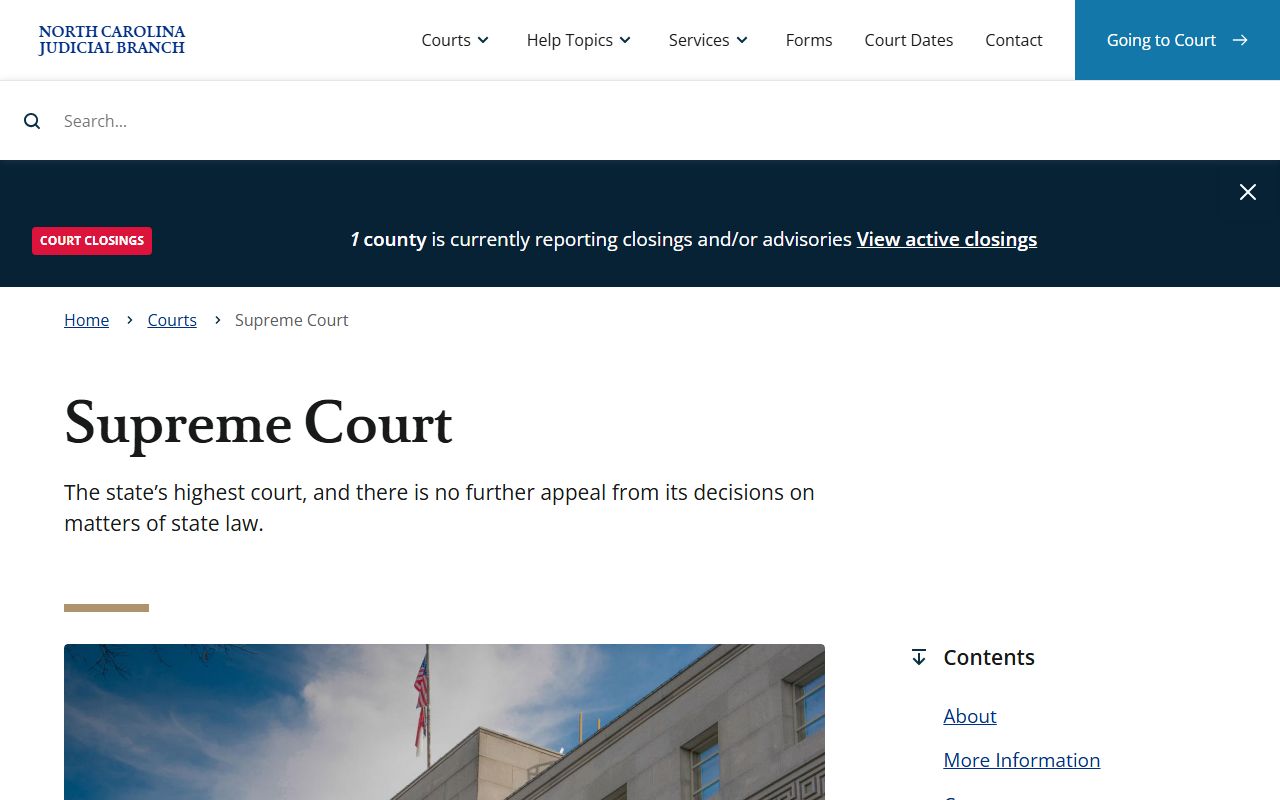
Appeals from Union County trial matters move through these two courts when the law allows the review.
Recovery Courts and DWI Treatment Court
North Carolina runs problem-solving courts called recovery courts. These mix judicial monitoring, treatment, regular court reviews, and a system of sanctions and incentives. The goal is to cut repeat offenses and improve treatment for eligible defendants. The Union County Judicial Branch page lists DWI Treatment Court as a related program, aimed at repeat or high-risk impaired-driving defendants.
These courts are not open to everyone. A judge must order placement, and local space depends on funding and case type. Anyone who thinks a recovery court fits should ask their attorney or the court. Placement is never automatic.
The image below is the Judicial Branch recovery courts overview.
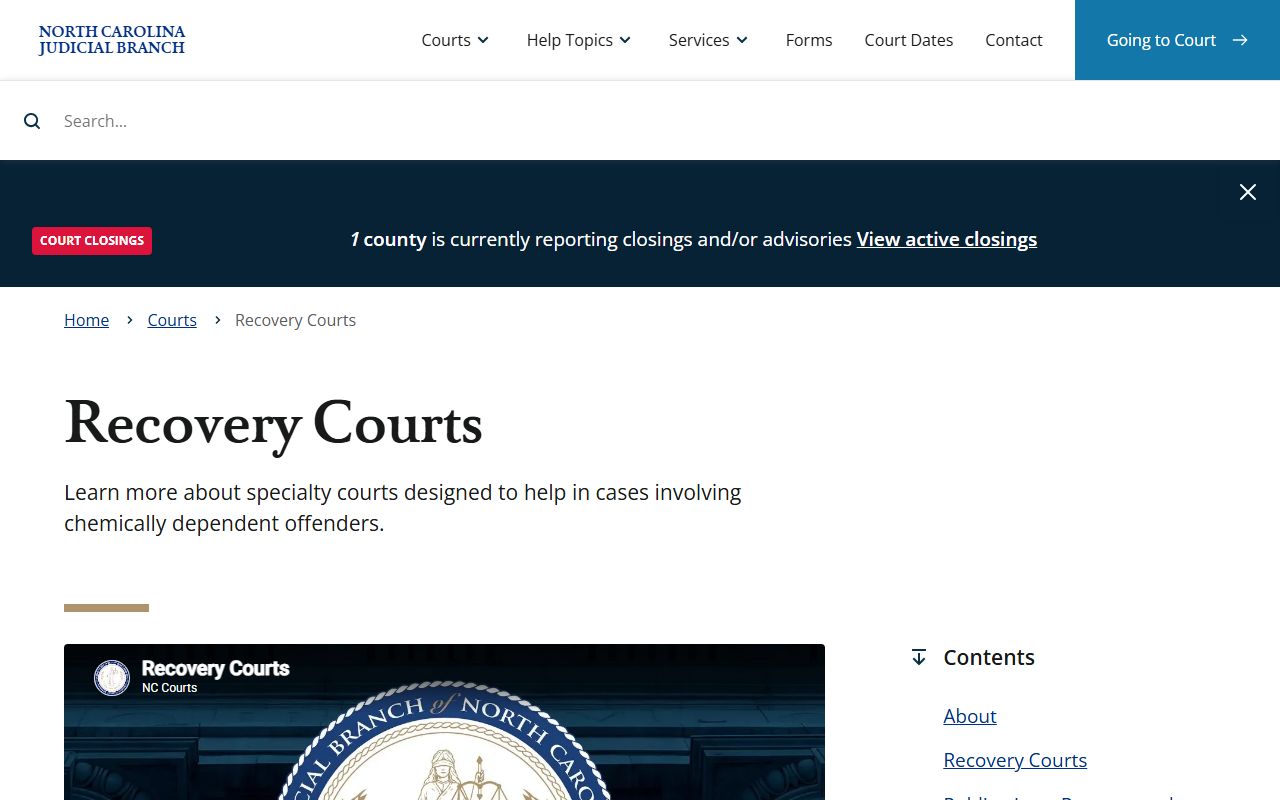
Local availability varies by district, so Union County content describes these as offered where the court orders and accepts a participant.
Federal Courts for Union County
Some matters never touch the state trial courts at all. Federal crimes, bankruptcy, civil rights claims, and federal-question cases go to federal court. Union County falls in the Western District of North Carolina, with the federal courthouse most associated with the district in Charlotte, not Monroe. Federal files are searched through PACER, not the state eCourts Portal.
Bankruptcy runs through the U.S. Bankruptcy Court for the Western District. Appeals from the federal district court go to the U.S. Court of Appeals for the Fourth Circuit. These records are entirely separate from the Union County Clerk of Superior Court. For a deeper records walkthrough, see the court records page.