
What Probate Covers in Union County
Probate is the legal process of settling what a person leaves behind after death. In North Carolina, this work runs through the Clerk of Superior Court, not a stand-alone probate court. The Union County clerk handles estate administration for people who lived in the county or owned property here. The clerk reviews wills, appoints the people who will settle the estate, and signs off on the final accounting.
The reach of probate is wide. It covers wills filed after a death and applications for letters that let someone act for the estate. It includes small-estate collection by affidavit, inventories, accountings, creditor notices, and the closing of the estate. Guardianships of minors and adults also fall under the clerk. So do certain special proceedings tied to estates and property.
The image below is the North Carolina Judicial Branch wills and estates help topic, the state guide for common steps and terms.
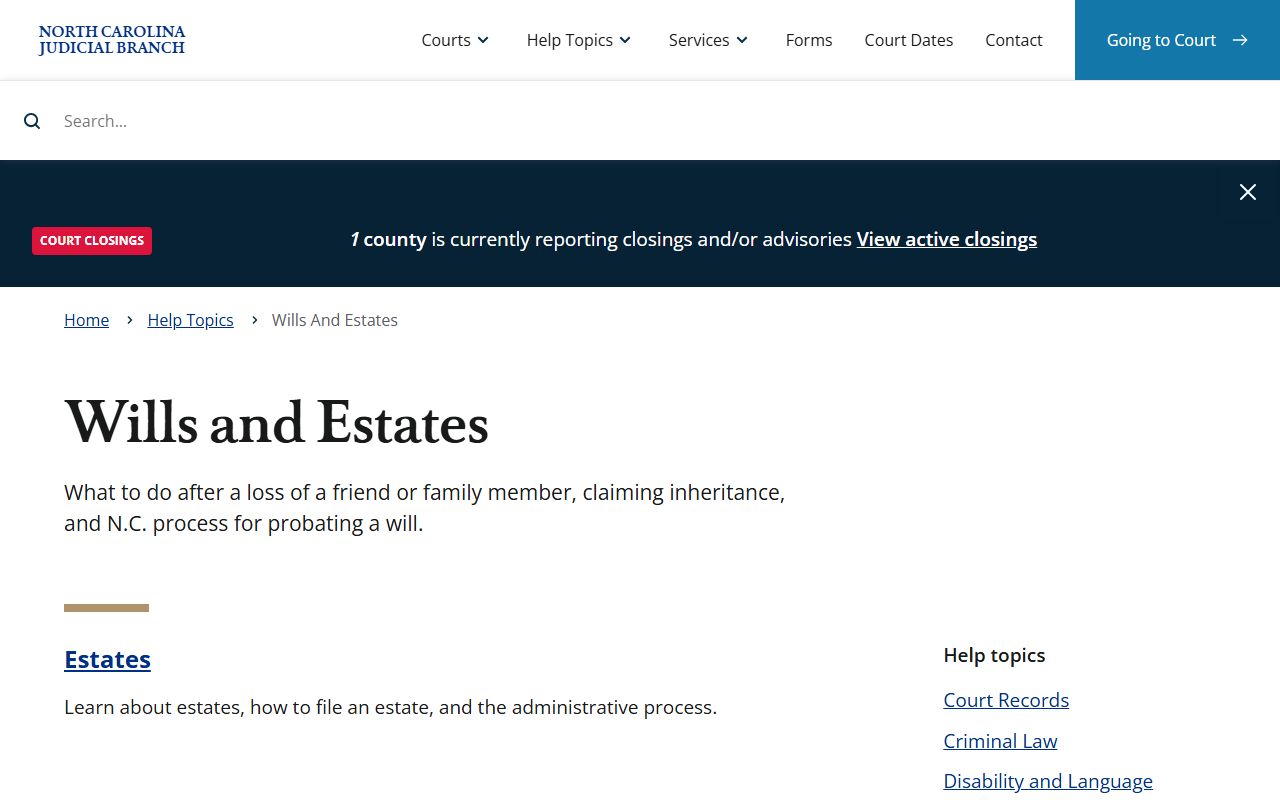
That page pairs well with the Union County clerk's office, which handles the local filings the state guide describes.
Probate Terms Defined
Estate paperwork is full of words that do not come up in daily life. A quick guide helps before you read a file or fill out a form. The terms below show up across most Union County probate records.
- Testator
- A person who dies leaving a valid will.
- Executor
- The person named in a will to settle the estate.
- Administrator
- The person the clerk appoints to settle an estate when there is no will.
- Intestate
- Dying without a valid will, so state law decides who inherits.
- Guardianship
- A court-set role where one person acts for a minor or an adult who cannot act alone.
- Conservatorship
- An arrangement to manage the property and money of a person who cannot manage it themselves.
How Probate Works in Union County
The estate process follows a set order. It starts at the clerk's counter and ends when the final account is filed. Each step has its own paperwork and deadlines under state law. The walkthrough below lays out the path most estates take.
- Determine whether the decedent lived in Union County or owned property that needs local estate administration.
- Bring the original will, the death certificate, applicant identification, and the required forms to the Clerk of Superior Court.
- The clerk decides the estate type: full administration, small estate, summary administration, or another procedure.
- The personal representative qualifies and receives letters that grant authority to act.
- Notice to creditors goes out, and inventory and accounting deadlines follow state law.
- Claims are paid, assets are distributed, and the final account is filed to close the estate.
The clerk cannot give legal advice. Staff can hand you forms and explain the process, but for legal questions you need an attorney. Many people handle a simple estate on their own using the Judicial Branch forms.
Not every estate needs full administration. When the assets are small enough, the clerk may allow collection by affidavit instead, which skips much of the longer process. A surviving spouse may also have a right to certain allowances. Summary administration can apply when the spouse takes everything under the will or by law. The clerk decides which path fits the facts you bring in. That is why the original will, the death certificate, and a clear list of assets matter at the first visit. Getting the right estate type set early keeps the rest of the case moving.
How to Search Union County Probate Records
Estate records in Union County are kept by the Clerk of Superior Court. Where the records are public online, you can search them through the North Carolina eCourts Portal by picking Union County. Where they are not online, you ask the clerk directly. The clerk keeps the official estate file either way.
A name search is the usual way in. Have the decedent's name ready, and the estate file number if you know it. The table below shows the search fields you will likely use in the Portal or at the clerk's counter.
| Field | Required | Notes |
|---|---|---|
| Decedent / party name | Optional | Search the Portal where estate records are public, or ask the clerk. |
| Case number | Optional | The estate file number if you already know it. |
| County | Recommended | Select Union County to keep results local. |
| Case type / category | Optional | Estate, special proceeding, or guardianship where the Portal lists it. |
For the wider case search beyond estates, see the Union County court records page.
What Union County Probate Records Show
An estate file is built from a set list of items. Once you know what each one is, the file reads cleanly. Court record-keeping by the clerk is required by N.C. G.S. § 7A-109, which lists estates among the records clerks must keep. The fields below appear in a typical Union County estate record.
- Estate file number and the decedent's name.
- Date of death and the applicant or personal representative name.
- Attorney of record, if any, and whether a will was filed.
- Letters issued and the type of administration.
- Inventory due and filed dates, plus creditor notice and accounting events.
- Orders and clerk rulings entered in the file.
The screenshot below shows G.S. 7A-109 on the General Assembly site, the statute that sets clerk record-keeping rules.
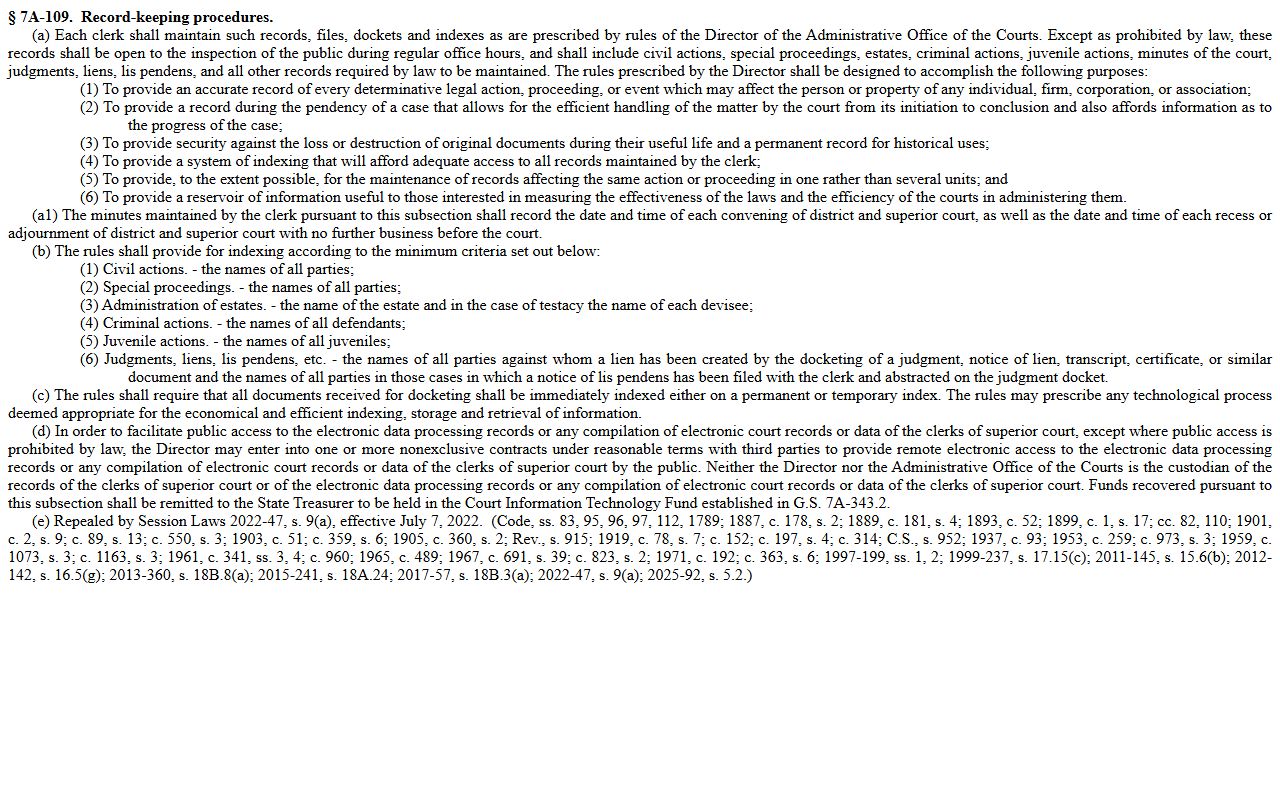
This is the law that requires the clerk to keep estate files, dockets, and indexes the public can inspect during office hours.
Guardianship Records in Union County
Guardianship is part of the clerk's probate work. The clerk decides whether an adult lacks the capacity to manage their own affairs, and appoints a guardian when needed. Guardianship of a minor also runs through this office. These cases protect people who cannot fully protect themselves, so they carry extra care and some privacy limits.
Guardianship files include the ward and guardian names and the orders the clerk enters. Sensitive details, like medical and capacity findings, may be restricted. The image below is the North Carolina Judicial Branch guardianship help topic.
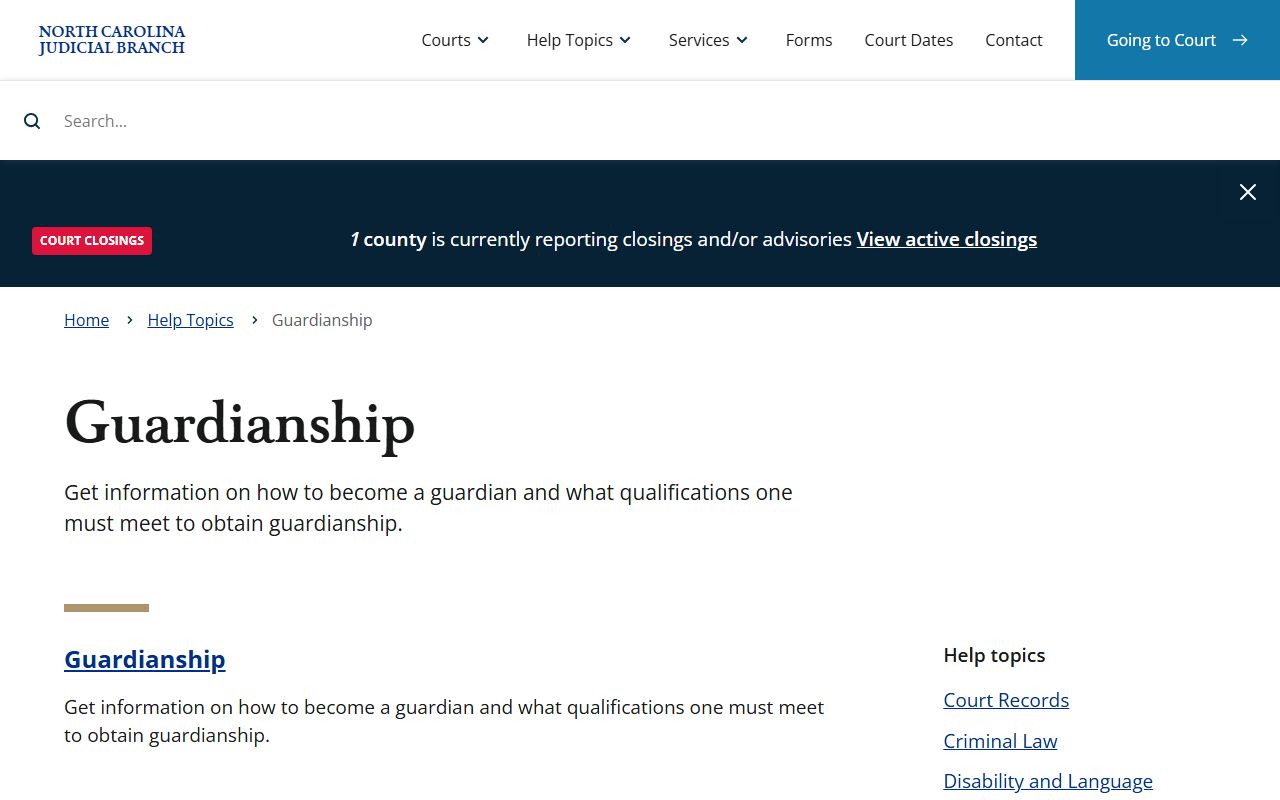
The state guide explains who can be a guardian and how the process moves, which matches the path through the Union County clerk.
Union County Clerk of Superior Court
All probate filings in the county go through one office. The Clerk of Superior Court sits in the Union County Judicial Center in downtown Monroe. This is where you file a will, qualify as a personal representative, or request a certified estate document. The contact card below has the office details.
Union County Clerk of Superior Court
Union County Judicial Center
400 North Main Street
Monroe, NC 28112
704-698-3196
Mon-Fri, regular court hours
For a fuller profile of the office, its duties, and request methods, see the Clerk of Superior Court page.
Probate Filing Fees in Union County
Estate fees in North Carolina are set by the court system, and the clerk collects them. Court costs in the administration of estates fall under state statute. The exact amounts are tied to the type and value of the estate, so a single flat number does not fit every case.
Note: A Union County estate fee schedule and any will-deposit policy were not found in the official text reviewed, so confirm current amounts with the Clerk of Superior Court before filing.
The state forms library is the right place to start before you pay anything. The screenshot below shows the North Carolina Judicial Branch statewide forms page.
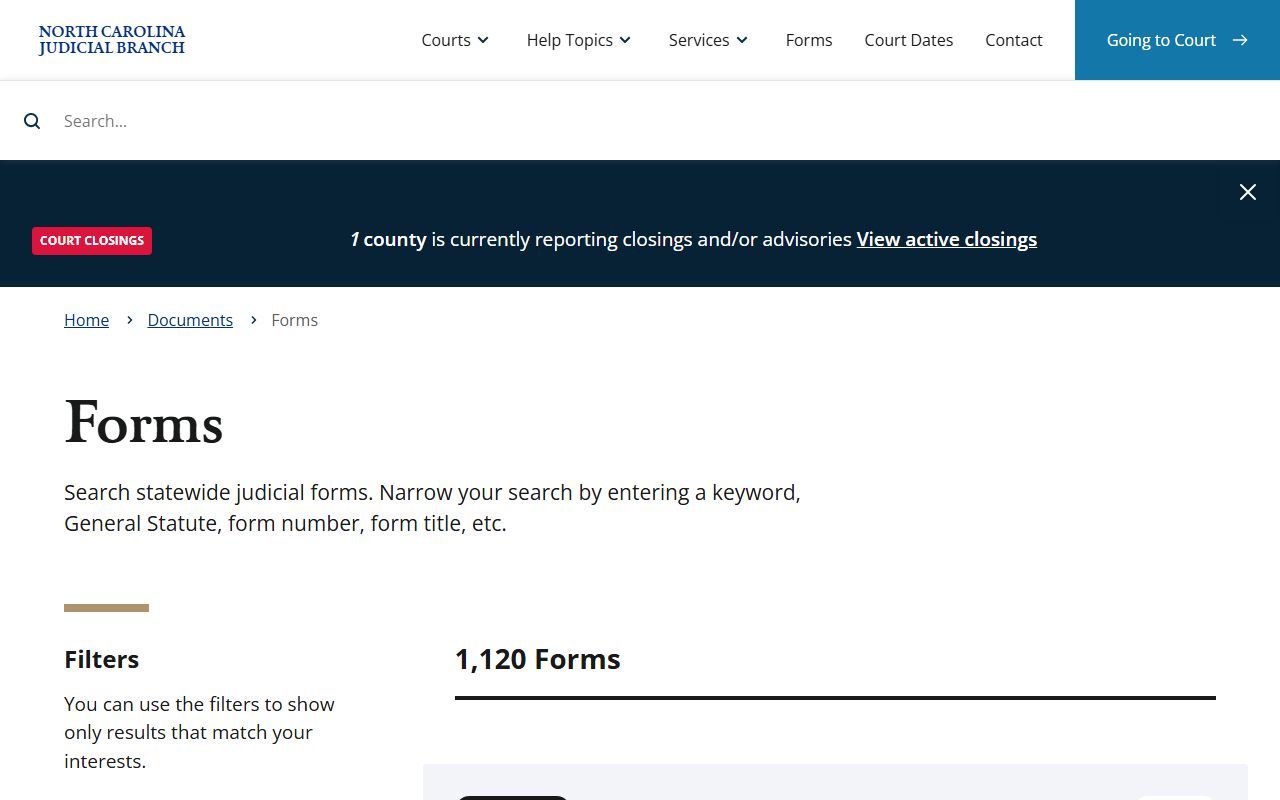
Estate and guardianship forms there carry AOC numbers, and the clerk can tell you which ones your filing needs.
Confidential Probate Details
Most adult estate files are open, but not every part is public. Sensitive personal identifiers are redacted. Social Security numbers, financial account numbers, and certain medical or capacity findings do not show in a normal search. Guardianship files in particular can hold restricted health information about the ward.
Vital records that connect to an estate follow their own rules. Certified death and marriage copies are restricted under N.C. G.S. § 130A-93 to listed family and authorized parties. The image below shows that statute on the General Assembly site.
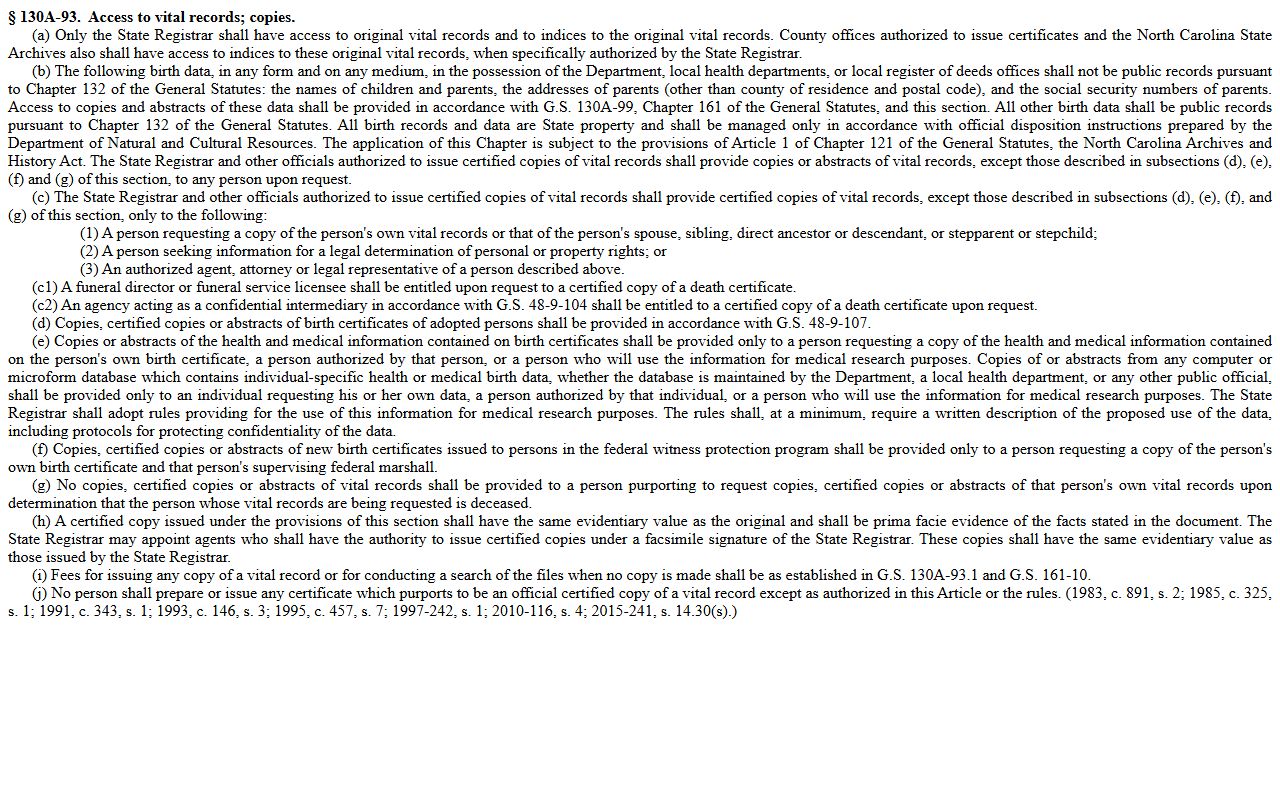
When an estate needs a certified death certificate, that copy comes from the Register of Deeds under these access rules, not from the court clerk.
The broader public-records framework still leans toward open access. Under state law, most government records are public unless a statute closes them. Estate files generally fall on the open side once they are filed. The limits above are the exceptions, not the rule. If you cannot find a record online, the clerk can tell you whether it is public, sealed, or simply not yet entered in the system.