
Role of the Union County Clerk of Superior Court
North Carolina runs a unified court system, and each county has one Clerk of Superior Court. In Union County this office is the local custodian for trial-court records. That means case files, court dockets, judgments, criminal record searches, estate files, special proceedings, and many court financial records all pass through the clerk. The clerk is an elected office and a constitutional part of the Judicial Branch. It is not a county department, and it should not be confused with the Clerk to the Board of Commissioners or the Register of Deeds.
The clerk does more than file paper. The office acts as a judge of probate, handles estates, oversees certain special proceedings, and processes a wide range of court paperwork. Staff can give you forms and explain process. They cannot give legal advice. That line matters, since clerk staff field questions all day but are barred from telling you what to do in your case.
The screenshot below comes from the Judicial Branch court records help topic, the state's starting point for understanding what court records exist and who keeps them.
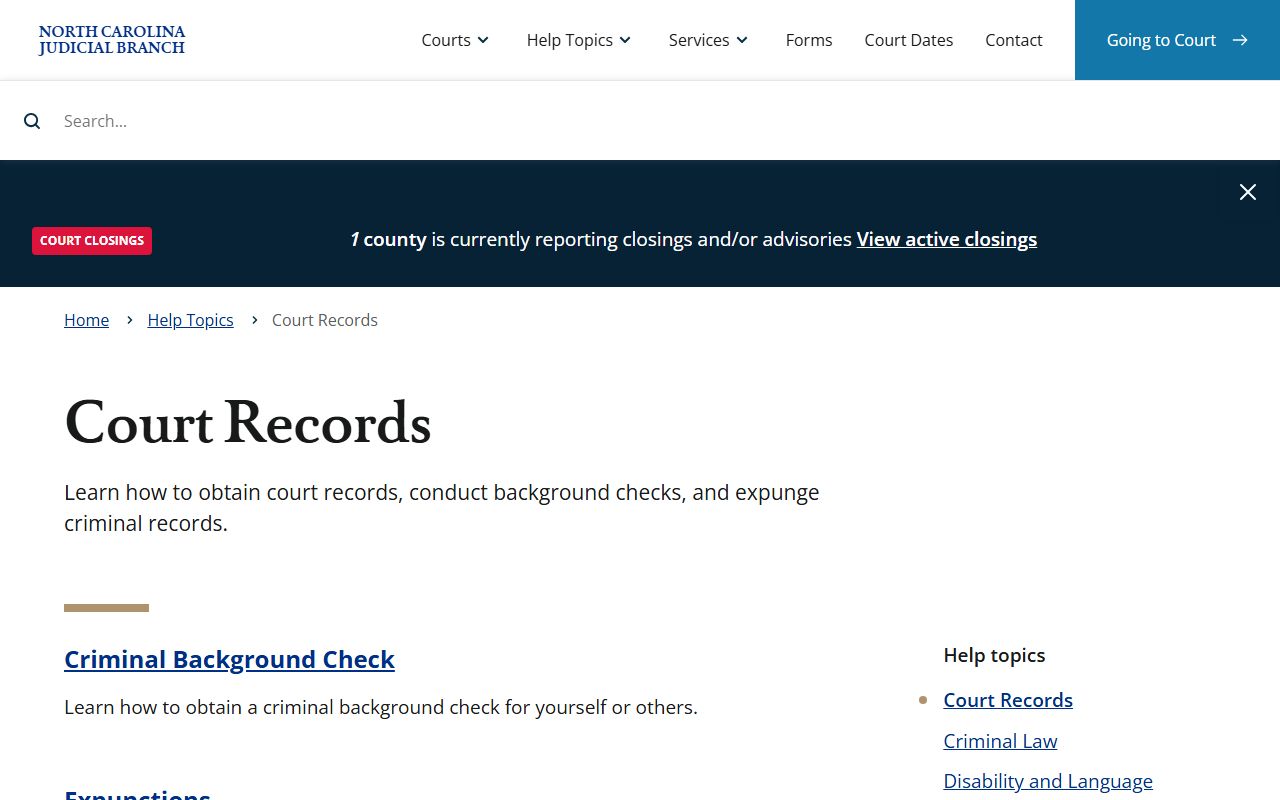
That page points users to the county clerk for case files, which is exactly the role the Union County office plays.
Court Records Custody Under G.S. 7A-109
The clerk's record-keeping job is set by statute. G.S. 7A-109 directs the Clerk of Superior Court to maintain records, files, dockets, and indexes as the Administrative Office of the Courts prescribes. The same statute says those records stay open for public inspection during regular office hours, except where the law prohibits it. The list of records is broad. It covers civil actions, special proceedings, estates, criminal actions, juvenile actions, minutes, judgments, liens, and lis pendens.
Most of these are now electronic. Union County moved onto the statewide eCourts system, called Enterprise Justice or Odyssey, in October 2024, and every North Carolina county was on the system by October 13, 2025. The public-facing search tool is the North Carolina eCourts Portal. The clerk still holds the official file, though. The Portal is useful for case information, but it is not the certified record, and certified copies come from the clerk.
The image below is the Judicial Branch guidance on obtaining court records, which explains how to get copies from the county clerk.
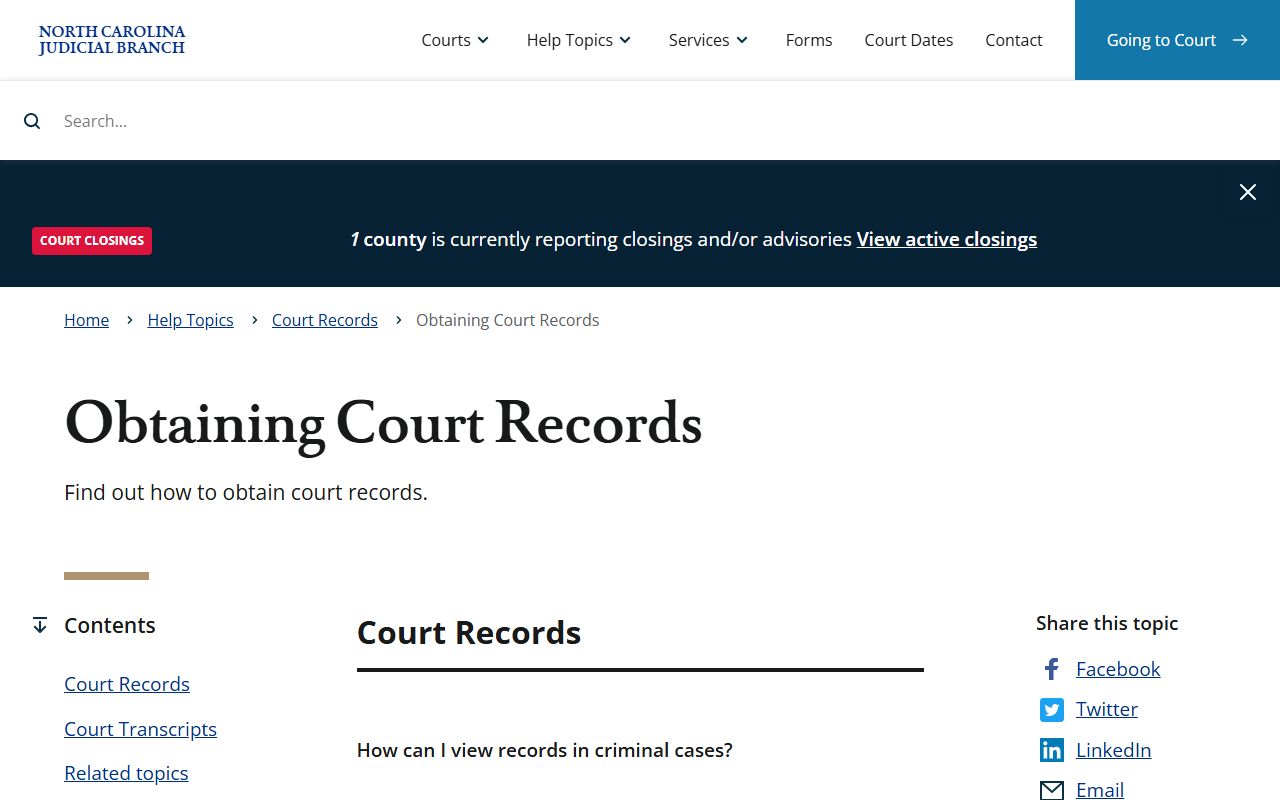
It confirms that the county clerk, not the state office, fills requests for local case files and certified copies.
Certified Criminal Background Checks
One of the most common reasons people contact the clerk is a criminal background check. North Carolina handles single-county certified searches through the Clerk of Superior Court, not the Portal. For a Union County search, you complete and print Form AOC-CR-314 and submit it to the clerk with a $25 fee. The fee covers a single county and a single name search.
Payment rules depend on how you submit. By mail, the clerk takes a money order or certified check only; personal checks are not accepted. In person, you may pay by credit card, cash, money order, or certified check. The result is a certified record you can use for official purposes.
There is also a free option. Any courthouse offers public access computers where you can run a non-certified self-service search at no charge, though printing may cost a small amount. The Judicial Branch is clear that the Portal is handy for case lookups but should not be treated as a background check; for that, use the clerk's office.
The screenshot below shows the Judicial Branch criminal background check page, which lays out the AOC-CR-314 process and the self-service option.
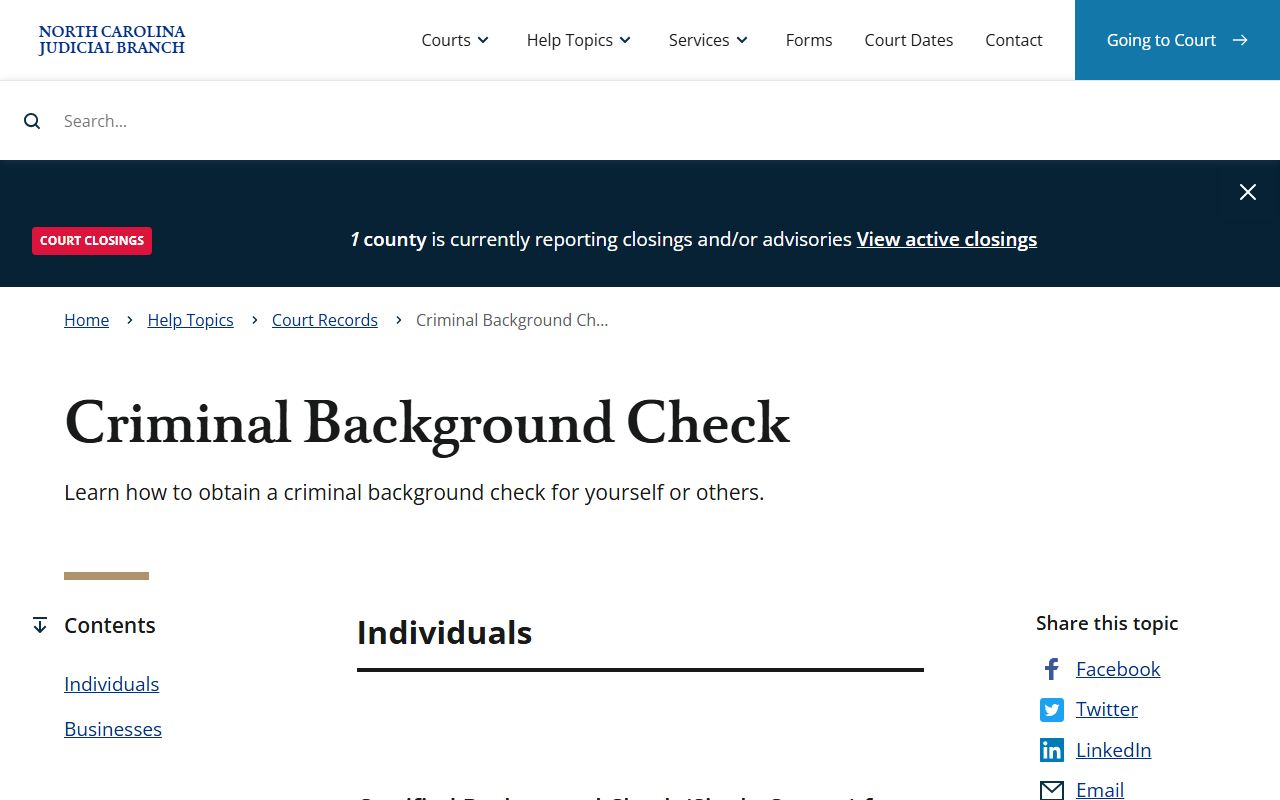
It spells out the difference between a certified single-county search and a free self-service lookup at the courthouse.
Note: A certified single-county criminal record search in Union County uses Form AOC-CR-314 and a $25 fee paid to the Clerk of Superior Court, not the online Portal.
Estates and Special Proceedings
North Carolina has no separate probate court. The Clerk of Superior Court handles estate administration and many special proceedings. So when a person dies, the estate file goes through the Union County clerk. Files can include wills, applications for letters, inventories, accountings, creditor notices, and estate orders. The clerk also handles guardianships, name changes, and certain property special proceedings.
The clerk acts much like a judge for these matters. The office decides the right estate type, qualifies the personal representative, and issues letters. For the full estate path, see the probate records page. Marriage and divorce records split between two offices, so check the marriage and divorce records page to see which part the clerk holds.
The image below is the Judicial Branch expunction overview, since expunction petitions are also filed with the clerk.
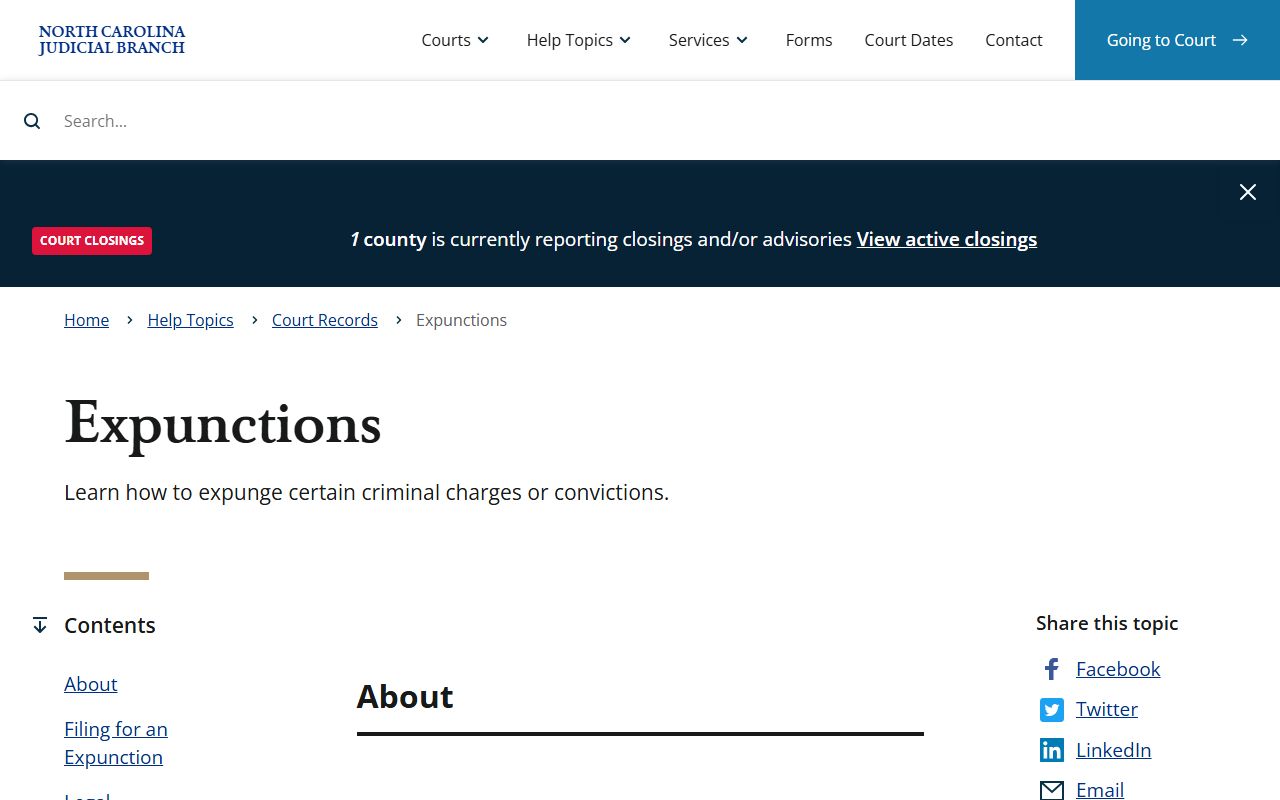
Expunction petitions go to the clerk in the county where the person was charged or convicted, so Union County cases are filed with the Union County clerk.
Records Request Form Fields
Two forms cover most clerk records requests. The certified single-county criminal search uses AOC-CR-314. State administrative records use the NCAOC online request form, though that form does not reach county case files. The table below lists the fields on the AOC-CR-314 criminal search form.
| Field | Required | Notes |
|---|---|---|
| County | Yes | Single county only; Union County for this search. |
| Name searched | Yes | The name-based search subject. |
| Requester information | Yes | Submitter contact fields on the form. |
| Clerk certification | n/a | Completed by the Clerk of Superior Court. |
| Payment | Yes | $25; mail money order or certified check; in person card, cash, money order, or certified check. |
The NCAOC public records request form is shorter still. It has a requesting-individual section, a records-requested section, a submit step, and a notice that NCAOC is not the custodian of court documents, case information, or birth and marriage certificates. The image below shows the public record request page.
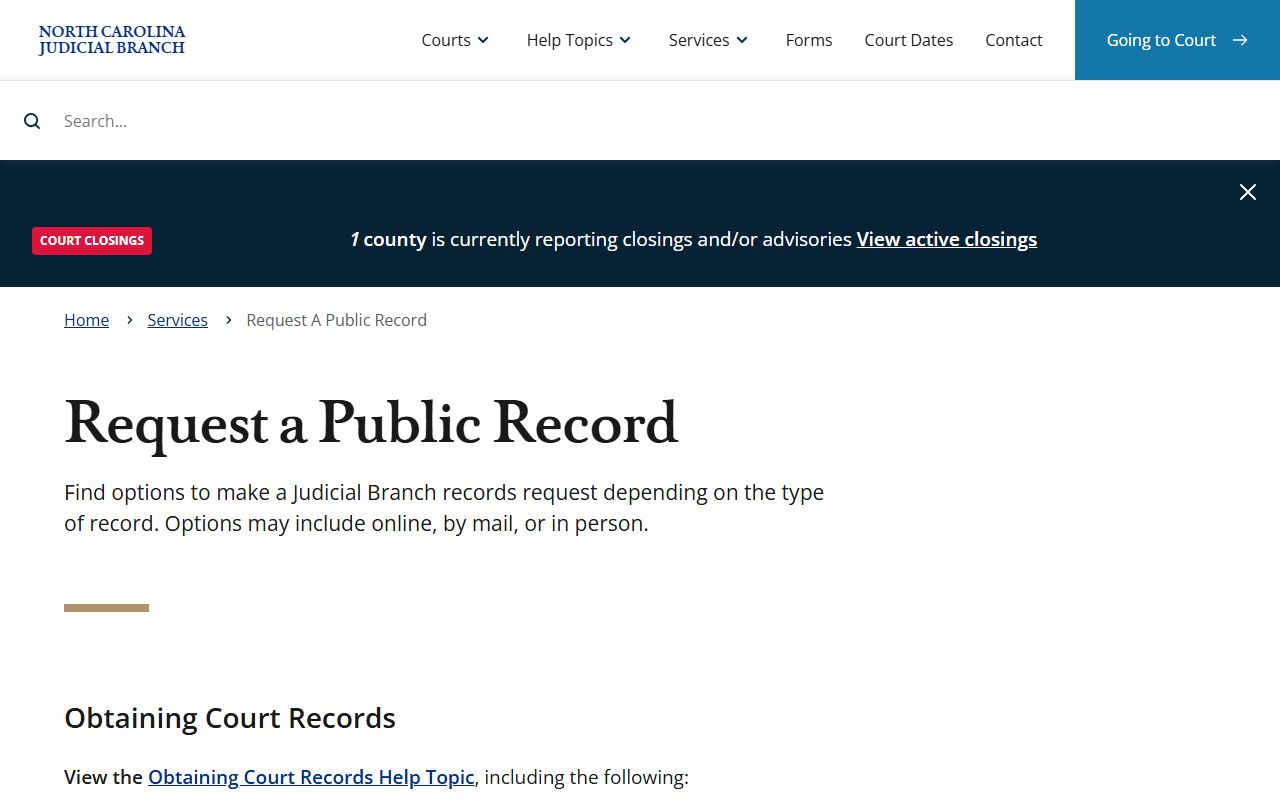
Use this state form only for Judicial Branch administrative records, not for Union County case files, which come from the clerk.
How to Request a Certified Copy
A certified copy carries the clerk's signature and seal, which is what courts, employers, and agencies often require. An uncertified printout from the Portal will not do for official use. The steps below cover requesting a certified copy from the Union County clerk.
- Identify the exact record. Have the case number, party names, and document type ready so the clerk can find the file fast.
- Contact the Clerk of Superior Court at the Union County Judicial Center or visit in person during regular court hours.
- Ask for a certified copy of the specific document or the full case file as needed.
- Pay the copy and certification fee under the statewide cost schedule. Certified copies cost more than plain copies.
- Receive the sealed, certified record for your official use.
For a certified criminal background check, follow the AOC-CR-314 process instead, with its $25 fee. For court files you only need to read, the eCourts Portal and the courthouse public computers are free, as the court records page explains.
Union County Clerk Fees
Clerk fees vary by service. A certified single-county criminal record search has a set fee. Court copy fees follow the statewide cost schedule set by statute. Estate and special-proceeding costs are governed by separate fee statutes. The table pulls the figures confirmed by official Union County and Judicial Branch pages.
| Item | Amount |
|---|---|
| Certified single-county criminal record search (AOC-CR-314) | $25 |
| General expunction filing fee | $175 (many dismissed or juvenile types are free) |
| Plain or certified court copy fees | Per statewide cost schedule; confirm current rate with the clerk |
| Self-service non-certified search at courthouse computers | Free (printing may cost extra) |
Estate costs fall under G.S. 7A-307, and civil and criminal court costs fall under G.S. 7A-305 and 7A-308. Those amounts can change, so the clerk's office is the right place to confirm a current figure before you pay.
Clerk of Superior Court vs Register of Deeds
These two offices get mixed up constantly. Both sit in downtown Monroe, but they keep different records and serve different roles. The Clerk of Superior Court is a Judicial Branch office that keeps court files. The Register of Deeds is a county office that keeps land and vital records. Asking the wrong one wastes a trip.
The Register of Deeds, currently Crystal D. Gilliard, records deeds, deeds of trust, plats, assumed names, and powers of attorney. It also issues birth, death, and marriage certificates, marriage licenses, military discharges, and notary commissions, and it serves as a passport acceptance facility. Certified vital records there cost $10 each and uncertified copies cost $1 each, restricted under G.S. 130A-93 to eligible family members and authorized parties.
The clerk, by contrast, never touches deeds or marriage licenses. If you need a court case file or a certified criminal search, that is the clerk. If you need a birth certificate or a deed, that is the Register of Deeds at 500 North Main Street. The public records page maps which office holds which record across the county.
Union County Clerk of Superior Court Contact
The clerk's office sits inside the Union County Judicial Center in downtown Monroe. Use the Judicial Branch contact directory to reach a specific office, since the courthouse holds the clerk, the judges, the district attorney, and the magistrates. The contact card below gives the main details for the office.
Union County Clerk of Superior Court
Union County Judicial Center
400 North Main Street
Monroe, NC 28112
704-698-3196
Mon-Fri, regular court hours
For the statewide public records law behind these records, the screenshot below shows the Judicial Branch page about North Carolina public records law.
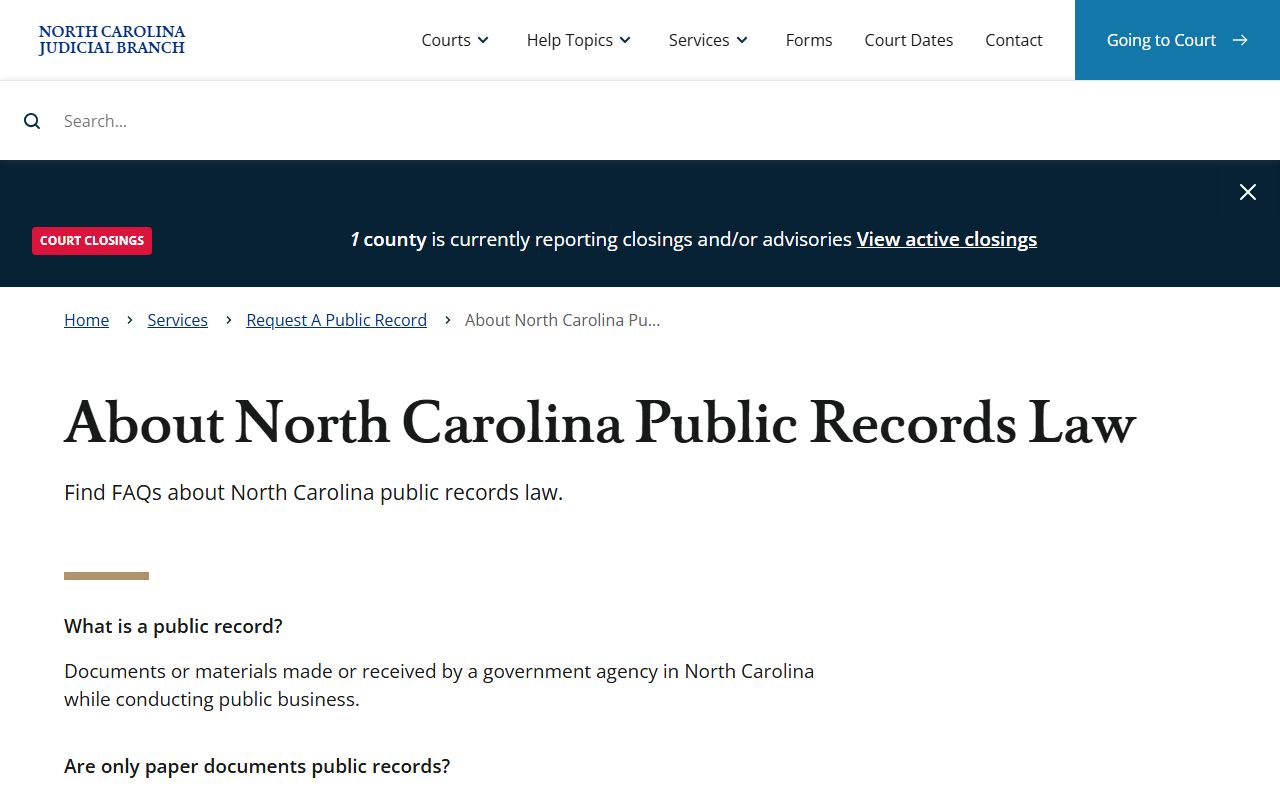
It backs up the clerk's open-records duty while noting the categories the law keeps confidential. For the courts the clerk serves, see the Union County District Court page, which also profiles Superior Court.