
How to Look Up Union County Jail Population Data
There is no single official Union County jail population dashboard with a live total. The Sheriff's site posts a current roster, not an aggregate count. So the population picture comes from a few places. The Sheriff's roster lets you see who is held now. County budget material describes the facility size. State and federal bodies publish the broader context.
The roster runs on P2C and pages through current inmates. You could count those rows at a single moment, but that is a snapshot, not an average. It does not equal the average daily population, a figure that smooths the count over a year. Read the roster as a point-in-time view, and treat budget and national reports as the source for trends and rates. Official Union County sources inspected did not publish an average daily population or a housing-unit breakdown.
Union County Jail Capacity Overview
Capacity is the firmest number available. The Union County Jail and Detention Center has a rated capacity of 264 beds. That figure comes from the North Carolina Jail Administrators detention facility resource directory and is echoed in county budget material that describes a 264-bed facility. Rated capacity is the bed ceiling, not the daily count. The actual population sits below, at, or sometimes above that line as bookings and releases shift.
| Facility | Address | Rated Capacity |
|---|---|---|
| Union County Jail / Detention Center | 3344 Presson Road, Monroe, NC 28112 | 264 beds |
The county runs this one detention center. There is no second county jail in the official sources. The Sheriff's Office operates the facility, and the jail administrator is Lori S. Pierce.
Average Daily Population
The average daily population, or ADP, is the count averaged over a period, usually a year. It is the best single measure of how full a jail runs. Union County official sources inspected did not publish an ADP, so no current figure can be stated here. That is a real gap, not an oversight.
The roster is not a substitute. Counting roster rows at one moment gives a point-in-time number that can swing day to day. An ADP needs daily counts over time, reported by the jail. Until the county publishes one, the honest read is the 264-bed capacity plus context from state and national reports. Do not treat any single roster count as an average.
What Drives Union County Inmate Population
Population is the sum of why people are held. Most county jail beds fill with people awaiting court, not people serving long terms. The mix shifts with arrest patterns, court speed, and bond decisions. The list below covers the main drivers in a county jail like Union County.
- Pretrial detainees awaiting first appearance, bond, indictment, plea, or trial.
- Sentenced misdemeanants serving short local terms.
- Felony defendants held pretrial or awaiting transfer to state prison.
- Probation violation holds.
- Failure-to-appear and order-for-arrest cases.
- DWI and other traffic-criminal holds.
- Temporary holds for other agencies when accepted.
Each driver moves on its own clock. A slow court term can raise the pretrial share. A wave of arrests can spike the count for weeks.
Pretrial vs. Sentenced Population
County jails differ from prisons on this split. A prison holds sentenced people. A jail holds a large share who have not been convicted yet. They sit pretrial, waiting on bond, a hearing, or a trial. The rest are sentenced to short terms or held before transfer.
Union County official sources did not publish an exact pretrial-to-sentenced ratio for the local jail. National data is clearer. The Bureau of Justice Statistics has long reported that most people in U.S. local jails are held pretrial, not serving a sentence. The table marks which numbers are local and which are national context.
| Status | Union County Figure | Note |
|---|---|---|
| Pretrial | Not published | National jail data shows most jail inmates are pretrial. |
| Sentenced | Not published | Short local terms and pre-transfer holds. |
Misdemeanor vs. Felony Population
Charge level shapes who stays and who leaves. Misdemeanor defendants often bond out fast or serve short terms. Felony defendants are more likely to be held pretrial or to wait for transfer to state custody after a sentence. That mix affects how long beds stay full.
Union County did not publish a felony-to-misdemeanor breakdown for the jail in the sources inspected. The drivers above show both groups are present. For the charge on any one case, the public roster lists a primary charge, and the court file carries the full detail through the Union County arrest records page.
Mental Health and Medical Population
A share of any jail population needs medical or mental health care. The Union County detention center runs a Medical Department that verifies prescribed medications and manages chronic conditions. The medical line is 704-283-3530 for serious conditions like cancer, HIV, Hepatitis C, or inhaler needs.
Union County did not publish the share of inmates receiving mental health or medical care in the official sources inspected. National research is consistent that jails hold a high share of people with mental health and substance use needs. Treat that as national context, not a local count.
National and State Context for Union County
Local numbers make more sense against a backdrop. Three bodies publish the wider data. The Bureau of Justice Statistics reports national jail counts and rates. The Vera Institute tracks county-level incarceration trends. The Prison Policy Initiative profiles each state, including North Carolina. None of these replaces a Union County figure, but they frame it.
The screenshot below is the Bureau of Justice Statistics website, the federal source for national jail data.
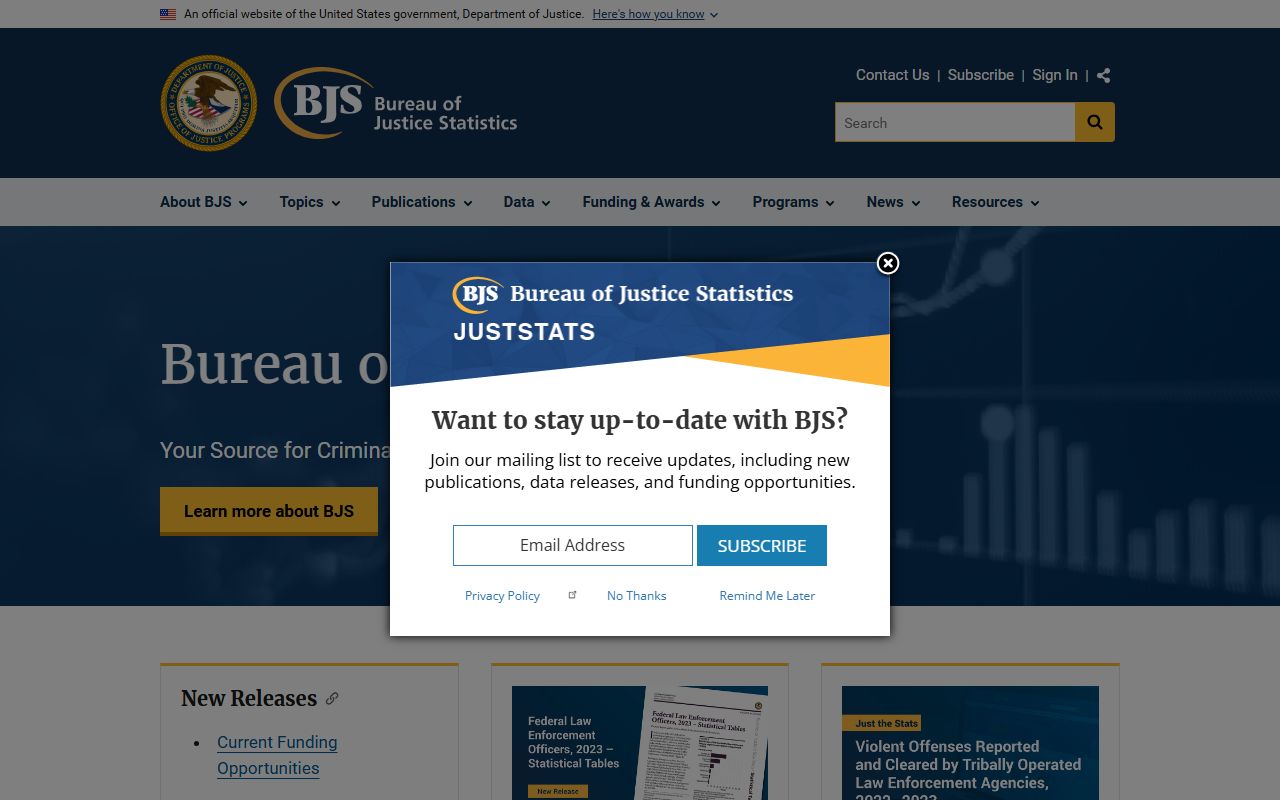
The BJS reports are national, so they give a rate to compare against, not a Union County total.
For a state-level read, the Prison Policy Initiative profiles North Carolina. The image below is the Prison Policy Initiative North Carolina profile.
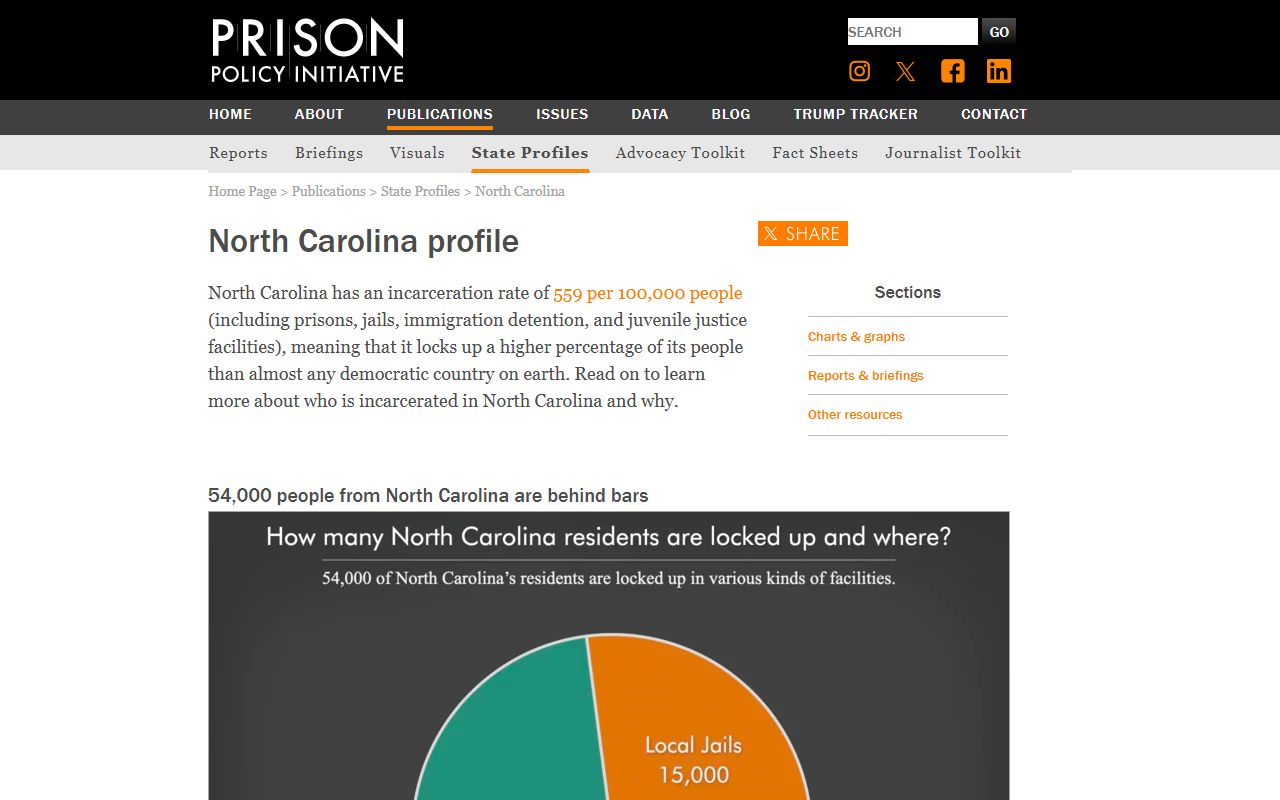
The state profile sets a North Carolina baseline, which sits between the national rate and any single county.
A per-100,000 rate is the fair way to compare a place to others. The table marks each level. The Union County row is left as not published, because no official local rate was found, and inventing one would be wrong.
| Level | Jail Population per 100k | Source |
|---|---|---|
| Union County | Not published | No official local rate located. |
| North Carolina | See state profile | Prison Policy Initiative NC profile. |
| National | See BJS reports | Bureau of Justice Statistics. |
For scale, the North Carolina Sheriffs' Association lists Union County's population at 239,859 across 643 square miles. That population is the base any local rate would use.
Population Trends Over Time
Trend data tells you whether a jail is filling or emptying. Official Union County multi-year jail population reports were not found in the sources inspected, so no firm local trend line can be drawn here. The daily count rises and falls as people are booked, released on bond, transferred to state prison, or held for court.
For broader movement, the Vera Institute tracks county incarceration trends, and BJS shows national shifts over years. Local news in 2025 discussed jail crowding and a possible new jail, but that is unverified news context, not an official operational finding, so it should not be read as a confirmed trend.
Searching Union County Inmate Records by Name
This page covers aggregate population data, not individual lookups. For a name-based search of the live jail roster, with charges, arrest dates, and booking details, use the Union County inmate records page. That tool answers who is held now, while the figures here answer how full the jail runs.
Where the Union County Population Data Comes From
Good numbers need a clear source. The local capacity figure comes from the North Carolina Jail Administrators detention facility resource directory and county budget material, both of which cite 264 beds. The current roster comes from the Sheriff's P2C system. For context, the Bureau of Justice Statistics and the Prison Policy Initiative publish national and state data, and the Vera Institute tracks county trends.
Where a number is missing, it is marked as not published, on purpose. The honest gaps here are the ADP, the demographic breakdown, the pretrial-to-sentenced ratio, the charge-level split, and any local per-100,000 rate. For the current roster behind these figures, see Union County inmate records.