
How to Search Union County Court Records
The main tool for Union County court records is the North Carolina eCourts Portal. The state finished moving all 100 counties onto the Enterprise Justice system, also called Odyssey, by October 13, 2025. Union County went live a year earlier, in the October 2024 group of Piedmont counties. The Portal is free and open to the public. You can search by party name, case or record number, citation number, or attorney. You can also find court dates and pay some matters there.
Get ready before you start. A full name helps. A case number or citation number helps more. Pick Union County in any county field so the list stays local. You can reach the Portal straight from the county page on the Judicial Branch site.
The steps below follow the official path laid out on the Judicial Branch services page.
- Open the eCourts Portal or start from the Union County Judicial Branch page.
- Pick the search type you need: case search, court date, or citation and payment.
- Select Union County so statewide results do not crowd your list.
- Enter a party name, case number, citation number, or attorney name.
- Review the result rows for case number, parties, court type, and status.
- Open a case to read the docket; request a certified copy from the clerk if you need an official record.
For older, sealed, expunged, juvenile, adoption, or mental health records, expect the Portal to hide the data. Those go through the clerk, and only if you are an authorized requester.
Union County Court Records Search Fields
The Portal gives you several ways to search. Each field narrows the result set in a different way. The Portal FAQ lists party name, record or case number, citation number, and attorney bar search as the public methods. The county field is the one most people forget, and skipping it pulls in noisy statewide hits. The table below maps the fields you will see when you run a Union County court records search.
| Field Label | Type | Required | Notes / Format |
|---|---|---|---|
| Party Name | Text | No | Search by a person or business name. Use last name, then first name where shown. |
| Record / Case Number | Text | No | Best match when you know the exact case number. |
| Citation Number | Text | No | For traffic and citation searches and online payments. |
| Attorney / Bar Number | Text | No | Search by attorney where the Portal supports it. |
| County | Dropdown | Strongly advised | Pick Union County to keep results local. |
| Case Type / Category | Dropdown | No | Options shift by screen. Verify the live interface. |
| Date Range | Date | No | Narrows filings or hearings by date when shown. |
Small claims and landlord cases follow the same path. The lead-in below shows the Judicial Branch small claims help topic, which explains how those cases start and appear in the record.
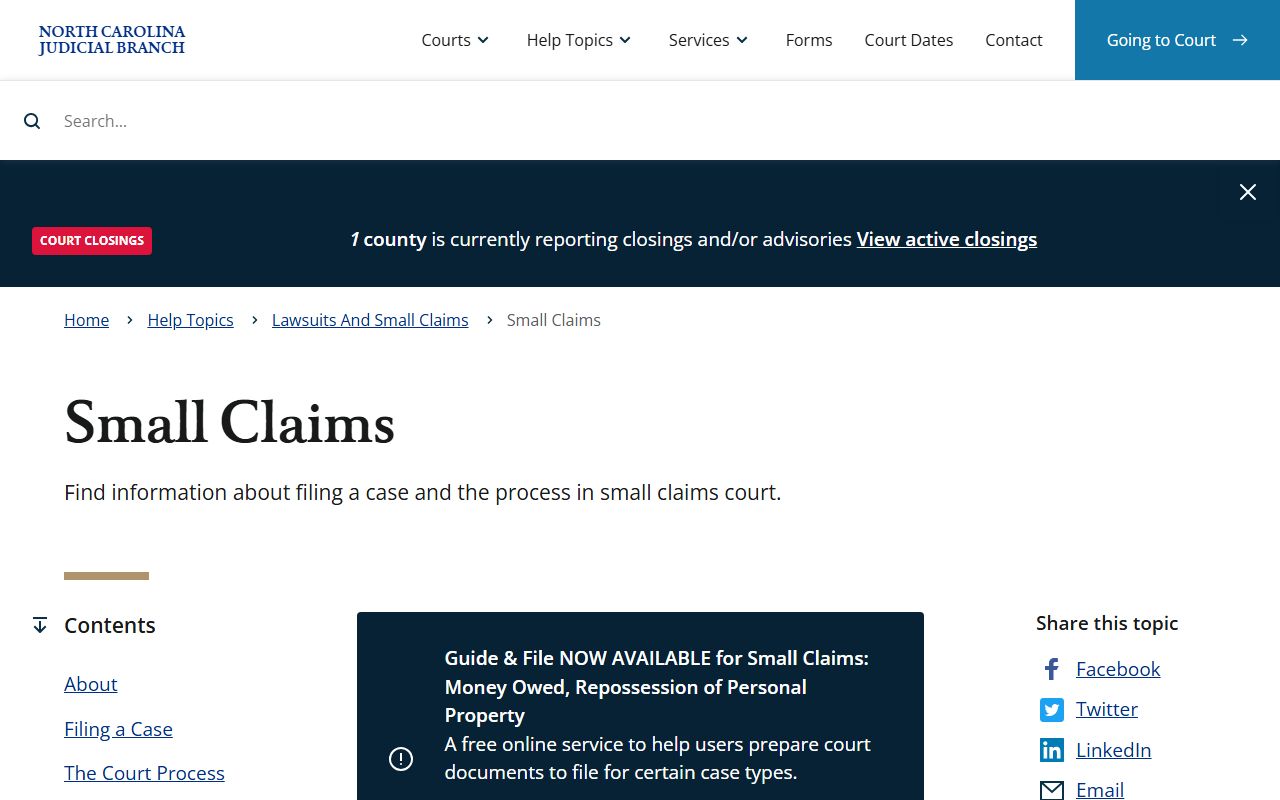
Small claims judgments, appeals to District Court, and writs of possession all leave a trail in the court record once filed.
Types of Union County Court Records
The clerk keeps many kinds of court files. Different courts make different records. District Court handles most traffic and small-claims matters, plus misdemeanors and family cases. Superior Court handles felonies and larger civil suits. The Clerk of Superior Court holds estates and special proceedings. Most adult case records can be searched and copied unless a statute or judge closes them.
Landlord and tenant disputes are a common reason people pull Union County court records. The screenshot below is the Judicial Branch landlord and tenant help topic, which covers summary ejectment cases heard by magistrates.
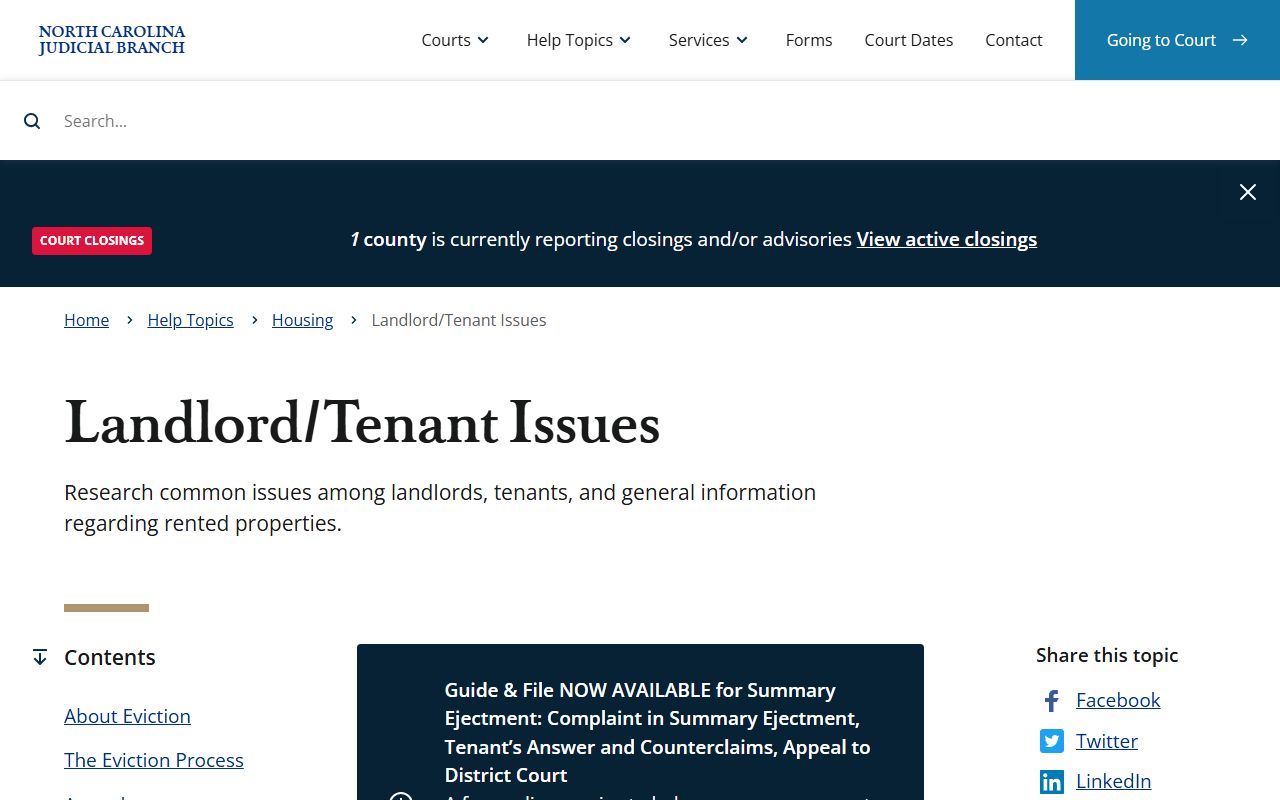
An ejectment file can include the complaint, summons, magistrate judgment, appeal notice, and the writ of possession. Here are the main record groups you will find.
- Criminal records - warrants, charges, pleas, judgments, bond orders, and sentences from District and Superior Court.
- Civil records - complaints, answers, motions, orders, judgments, liens, and lis pendens.
- Family records - divorce, custody, child support, and protective orders, with limits on sensitive parts.
- Probate and estate records - wills, letters, inventories, accountings, and guardianship files kept by the clerk.
- Traffic records - citations, fines, and dispositions, kept apart from the DMV driver record.
- Small claims and ejectment - magistrate judgments, appeals, and satisfaction of judgment.
What Union County Court Records Show
A court record is built from set fields. Once you know them, a docket is easy to read. The Portal shows most of these for public cases, while sealed parts stay hidden. The list below mirrors a standard Odyssey public case view for Union County court records.
| Field | What It Shows |
|---|---|
| Case Number | The unique court file number in Odyssey format. |
| County / Court Type | Union County, and Superior or District Court when exposed. |
| Case Type | Criminal, infraction, civil, small claims, domestic, or estate. |
| Filing Date | When the case opened or the filing was accepted. |
| Parties | State, plaintiff, defendant, petitioner, or respondent and their roles. |
| Attorneys | Attorney names and sometimes bar numbers. |
| Charges / Cause | Offense or claim, statute cited, and degree or class. |
| Bond / Release | Bond type, amount, and conditions where public. |
| Hearings | Date, time, courtroom, session, and sometimes the judicial officer. |
| Disposition / Status | Pending, dismissed, convicted, judgment entered, or appealed. |
| Documents | Some public pleadings or orders; certified copies require the clerk. |
Confidential identifiers stay redacted. Social Security numbers, financial account numbers, minor names, victim data, and sealed filings do not appear in the public view, even on an otherwise open case.
Public Access Laws for Union County Court Records
North Carolina law leans toward open records. The state Public Records Act treats most government documents as public, and court files have their own rules on top of that. Clerk court records stay open during regular office hours unless a statute blocks them. Any person may inspect, examine, and get copies, and the office must provide access at reasonable times. No agency is required to create a record that does not exist.
The state administrative office is not the keeper of county case files. A request for a Union County case file goes to the county clerk, not the state. The image below is North Carolina General Statutes Chapter 132, the Public Records Act itself.
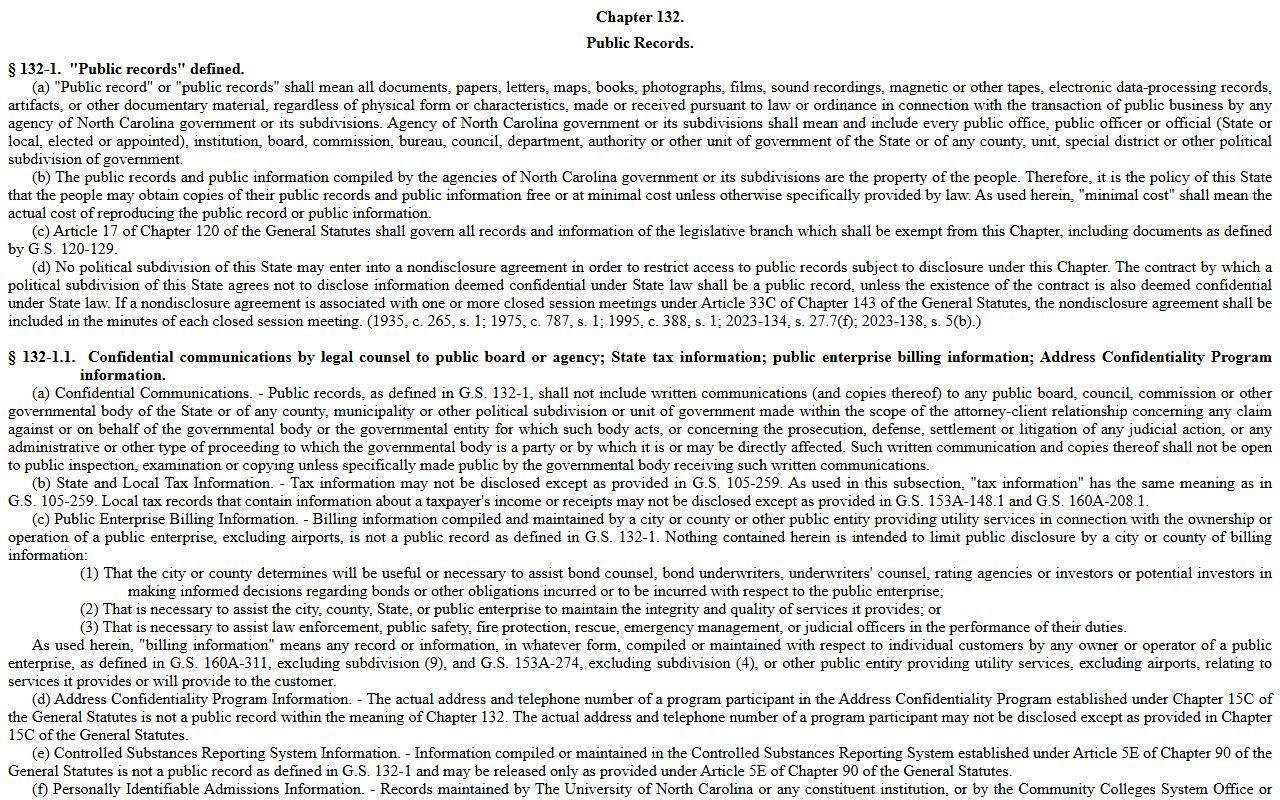
Chapter 132 sets the broad baseline, while the court-specific statute below controls how the clerk keeps and opens case files.
Key Statutes:
N.C. G.S. § 132-1 - Defines public records broadly across state and county government.
N.C. G.S. § 7A-109 - Keeps clerk court records open during office hours except where the law prohibits it.
N.C. G.S. § 50-8 - Sets out the pleading and filing rules for divorce cases in the court record.
Divorce filings are a good example of a public court file with private parts. The lead-in shows G.S. 50-8, the divorce pleading statute.
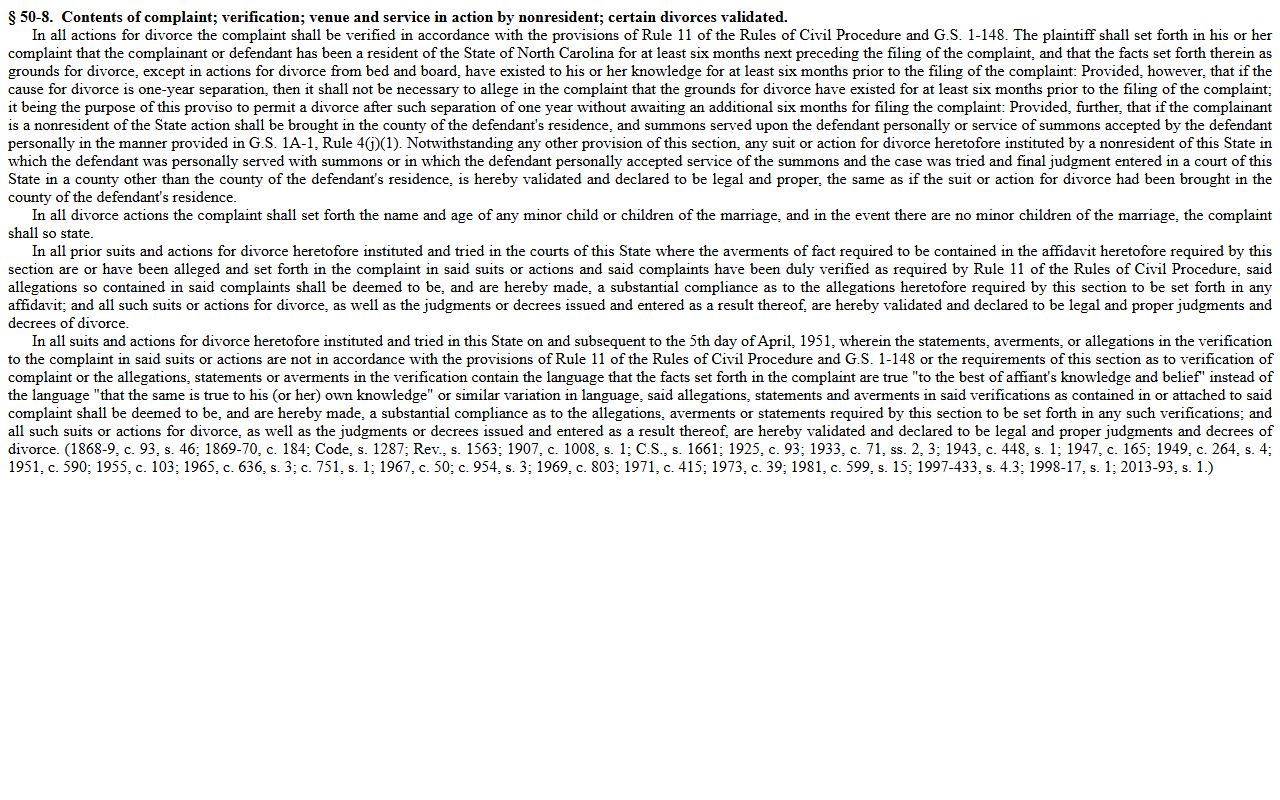
The complaint and judgment are part of the public file, but custody and support details for minors can be limited.
Records That Are Sealed or Confidential in Union County
Not every file is open. Some are closed to protect children, victims, or people whose cases ended in their favor. Juvenile delinquency records are confidential under G.S. 7B-3000, even though many juvenile hearings are open. Adoption files, mental health commitments, and abuse or neglect files are restricted by statute. Grand jury work stays secret until returned. Expunged records are removed or sealed and will not appear in a normal search.
To view a sealed record, you usually must be an authorized party or hold a court order. The petition goes to the Clerk of Superior Court in the county where the case was filed. For Union County cases, that means the Union County clerk. Expunction itself follows the same path. The general filing fee is $175, though many dismissed and not-guilty types are free, and juvenile expunction has no filing fee. A case can take several months because of record checks and hearing scheduling.
Note: Once an expunction is granted the order generally cannot be obtained later, since the related files are sealed or destroyed by the clerk.
In-Person Union County Court Record Requests
Some records are best pulled in person. A certified single-county criminal record search runs through the Clerk of Superior Court at the courthouse. You fill out and print Form AOC-CR-314 and submit it with the $25 fee. Mailed payments must be money order or certified check; the clerk does not take personal checks. In person, you can also pay by credit card, cash, money order, or certified check. A free self-service, non-certified background check can be done on the public access computers at the courthouse, though printing may cost extra.
The official guidance is on the NCAOC public record request page. That page makes clear the state administrative office is not the custodian of county case files.
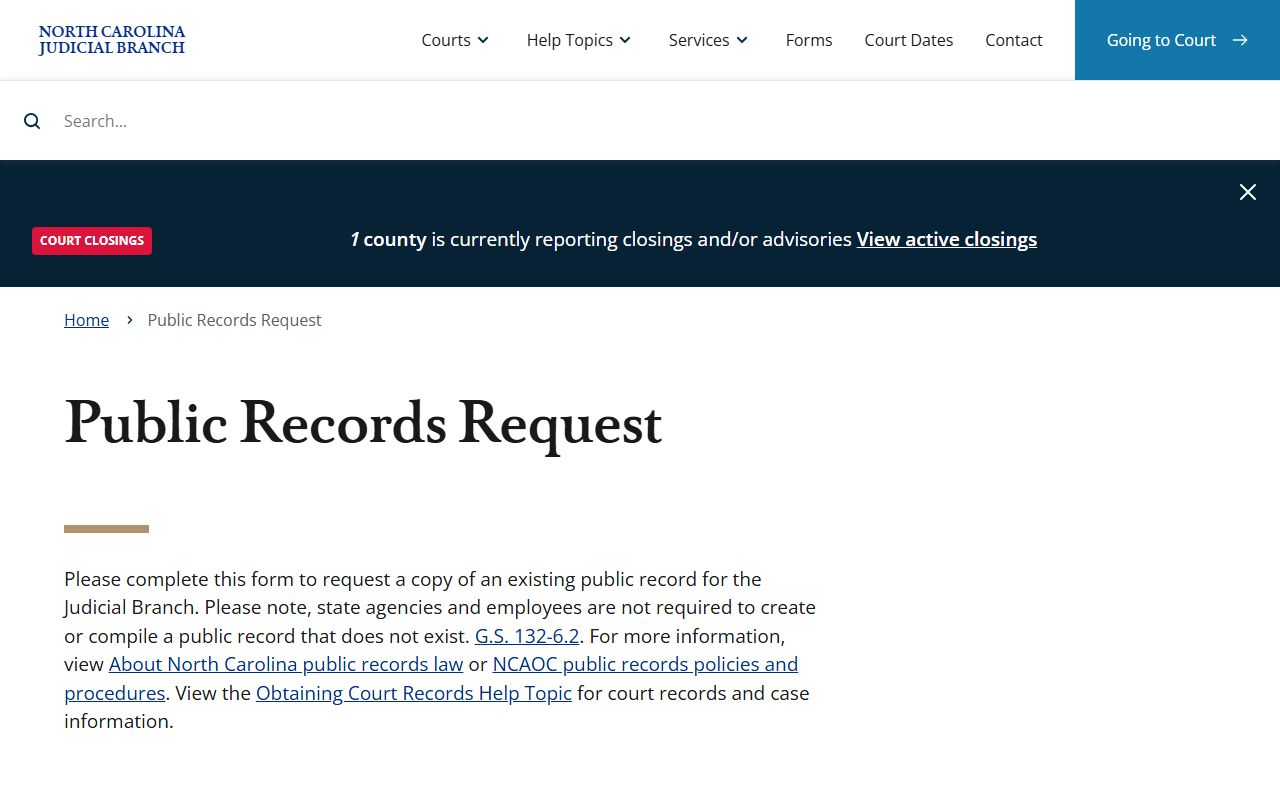
That form is for Judicial Branch administrative records, not county case files, so a Union County court records request still goes to the local clerk.
The main court facility sits in downtown Monroe. The map below points to the Union County Judicial Center location.
The Register of Deeds and several county offices sit one block north, so confirm which building you need before you go.
Union County Clerk of Superior Court
Union County Judicial Center
400 North Main Street
Monroe, NC 28112
704-698-3196
Mon-Fri, regular court hours